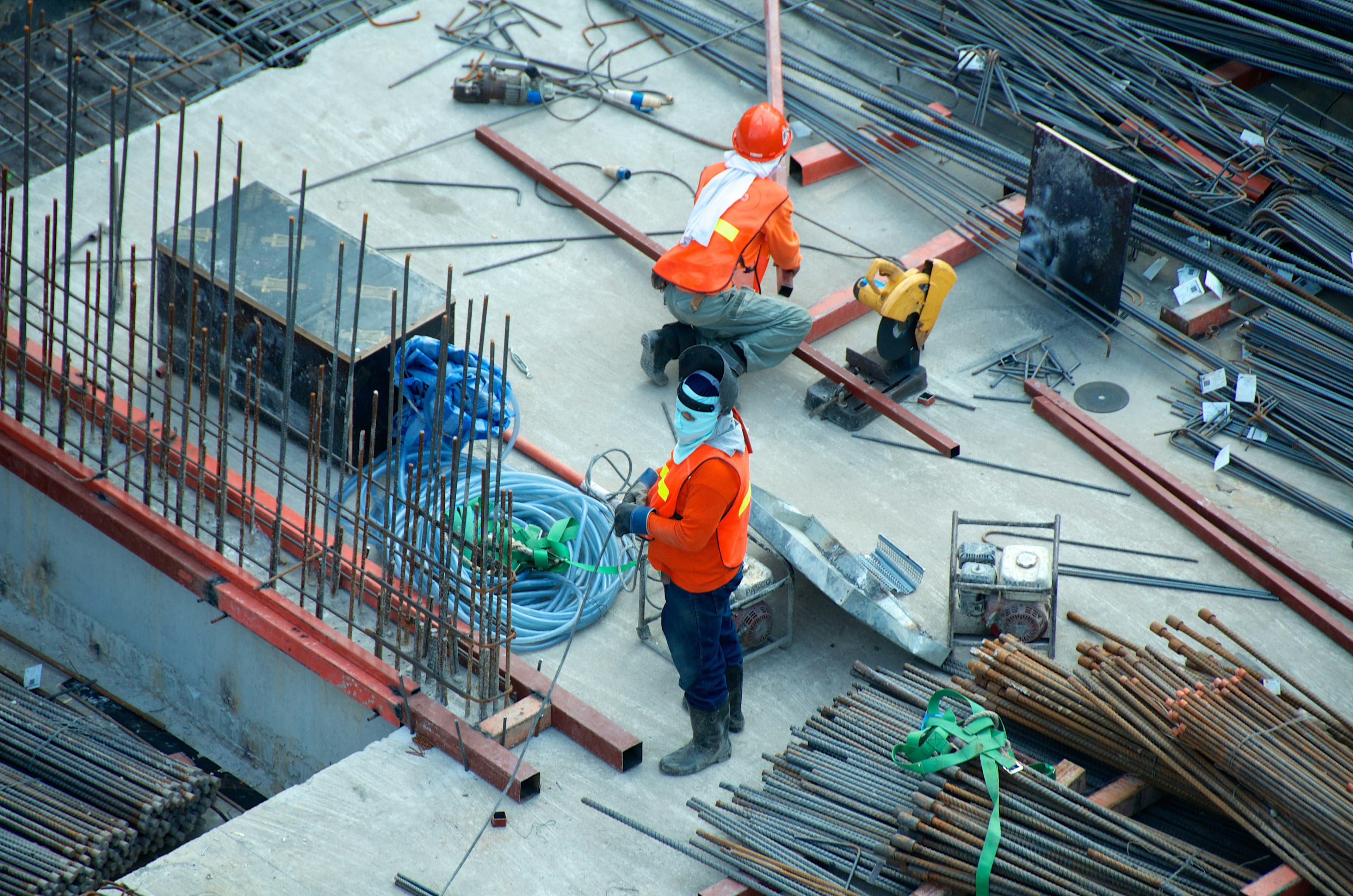
Why construction firms are using AI to connect ERP, field operations, and finance
Construction organizations operate across fragmented systems: ERP platforms manage job costing, procurement, payroll, and financial controls; field applications capture progress, labor, equipment usage, safety events, and subcontractor activity; finance teams then reconcile these inputs into monthly reporting cycles. The operational problem is not a lack of data. It is the delay, inconsistency, and manual effort required to turn project activity into reliable financial insight.
Construction AI addresses this gap by connecting structured ERP records with semi-structured and unstructured field data, then orchestrating workflows that improve reporting accuracy and decision speed. In practice, this means AI models and AI agents can classify field updates, map them to cost codes, detect anomalies in labor or materials, forecast budget pressure, and route exceptions into approval workflows before they become reporting issues.
For enterprise construction firms, the value is operational intelligence rather than isolated automation. AI in ERP systems becomes useful when it links project execution, commercial controls, and financial reporting into one governed decision environment. That requires more than dashboards. It requires AI-powered automation, workflow orchestration, data quality controls, and enterprise AI governance that can scale across business units, regions, and project portfolios.
The core integration problem in construction data environments
Most construction reporting delays originate from mismatched timing and data models. Field teams record progress daily, procurement updates arrive on different schedules, subcontractor invoices may lag by weeks, and ERP postings follow accounting controls that do not always reflect real-time site conditions. As a result, project managers, controllers, and executives often work from different versions of project status.
AI workflow orchestration helps by creating a translation layer between systems. Instead of forcing every application to use identical formats, AI services can interpret field notes, normalize units, reconcile naming differences, and align operational events with ERP master data. This is especially relevant in construction, where project-specific terminology, inconsistent coding practices, and changing subcontractor structures create persistent integration friction.
- ERP systems hold financial truth but often lag operational reality
- Field systems capture real activity but may lack accounting structure
- Manual reconciliation creates reporting delays and control risk
- Project teams need exception-based workflows, not more spreadsheets
- AI can improve data mapping, anomaly detection, and forecast quality when governance is in place
How AI in ERP systems improves construction reporting workflows
AI in ERP systems is most effective when it supports specific construction workflows rather than acting as a generic analytics layer. Common use cases include automated cost code mapping, invoice classification, change order impact analysis, earned value estimation, cash flow forecasting, and variance explanation generation. These functions reduce the time finance teams spend collecting and cleaning data while improving the consistency of project-level reporting.
For example, daily field reports often contain useful indicators of financial risk long before those risks appear in formal accounting records. AI models can extract references to delays, rework, weather disruption, equipment downtime, or labor shortages from field logs and connect those signals to project budgets and schedules. When integrated with ERP data, these signals support AI-driven decision systems that flag likely cost overruns or margin erosion earlier in the reporting cycle.
This does not eliminate the need for accounting controls. Instead, AI-powered automation should operate within defined thresholds. Low-risk transactions can be auto-classified and routed into standard workflows, while higher-risk exceptions require human review. That balance is essential for enterprise AI scalability because construction firms need automation that reduces effort without weakening auditability.
Where AI agents fit into operational workflows
AI agents are useful in construction when they are assigned bounded tasks with clear system access and approval rules. A project controls agent might monitor daily production data and compare it with budgeted quantities. A finance operations agent might review incoming invoices, identify missing coding, and recommend the correct project, phase, and cost category. A reporting agent might assemble weekly project summaries by combining ERP transactions, field progress updates, and open risk items.
The practical advantage of AI agents is workflow continuity. Instead of waiting for teams to manually move data between systems, agents can trigger actions across ERP, document management, scheduling, and analytics platforms. However, enterprise deployment requires strict role-based access, logging, exception handling, and model monitoring. In construction, where contractual and financial accountability is high, agents should support operators and controllers rather than replace them.
| Construction workflow | Typical data sources | AI capability | Business outcome | Governance requirement |
|---|
| Daily progress to cost reporting | Field reports, ERP job cost, schedule data | Progress extraction, cost code mapping, variance detection | Faster weekly reporting and earlier budget visibility | Approved mappings, audit logs, human review for exceptions |
| Invoice and subcontractor processing | AP systems, contracts, ERP vendor master, scanned documents | Document classification, coding recommendations, anomaly detection | Reduced manual entry and fewer posting errors | Segregation of duties, confidence thresholds, approval controls |
| Change order impact analysis | Project management tools, ERP budgets, correspondence | Impact summarization, forecast modeling, risk scoring | Better margin protection and faster commercial response | Version control, legal review checkpoints, source traceability |
| Cash flow forecasting | ERP financials, procurement, billing schedules, field progress | Predictive analytics, scenario modeling, trend analysis | Improved liquidity planning and portfolio oversight | Model validation, forecast assumptions, executive sign-off |
| Executive portfolio reporting | ERP, BI platform, field systems, PM tools | Narrative generation, KPI consolidation, exception prioritization | More consistent reporting across projects | Data lineage, standardized KPI definitions, access controls |
Connecting field data to financial reporting with AI workflow orchestration
Construction field data is often the least standardized and most operationally valuable input in the reporting chain. Daily logs, site photos, equipment telemetry, labor entries, inspection records, and supervisor notes contain signals that affect cost, schedule, and revenue recognition. Yet these inputs rarely flow cleanly into ERP and AI analytics platforms without significant manual intervention.
AI workflow orchestration creates a structured path from field capture to financial action. A typical pattern starts with ingestion from mobile apps, IoT feeds, email, and document repositories. AI services then classify content, extract entities, map records to project structures, and identify confidence levels. Business rules determine whether the data updates a dashboard, creates a task, recommends an ERP transaction, or escalates to a project accountant or controller.
This orchestration layer is important because construction firms do not need every field event posted directly into ERP. They need the right events translated into financially relevant signals. For example, repeated references to rework in quality reports may not create an immediate accounting entry, but they should influence forecast assumptions, contingency review, and management reporting. AI helps connect those operational signals to decision systems without forcing premature financial postings.
- Ingest field data from mobile apps, forms, documents, sensors, and collaboration tools
- Normalize project identifiers, cost codes, vendor names, and location references
- Extract operational events such as delays, rework, productivity shifts, and material issues
- Match events to ERP structures and reporting hierarchies
- Route low-confidence or high-impact items into controlled review workflows
- Feed approved outputs into BI, forecasting, and executive reporting environments
Predictive analytics is one of the most practical AI applications in construction because project outcomes are shaped by recurring patterns: labor productivity changes, procurement delays, weather exposure, subcontractor performance, billing timing, and change order cycles. When these variables are connected across ERP and field systems, AI models can estimate likely cost-to-complete, cash flow pressure, margin risk, and schedule-related financial impact.
The quality of these forecasts depends on data discipline. If cost codes are inconsistent, field reporting is incomplete, or historical project data is not normalized, predictive models will produce unstable outputs. That is why enterprise AI implementation in construction should begin with a limited set of high-value forecasting scenarios and a clear data remediation plan. Predictive analytics should improve planning and exception management, not create false precision.
Enterprise AI governance for construction finance and operations
Enterprise AI governance is central to any construction AI program that touches ERP, financial reporting, or operational controls. Construction firms manage sensitive payroll data, vendor records, contract terms, project financials, and sometimes regulated infrastructure information. AI systems that process this data must operate within clear policies for access, retention, model usage, and auditability.
Governance should define which AI outputs are advisory, which can trigger workflow actions, and which require formal approval before affecting financial records. It should also establish data lineage standards so finance and audit teams can trace how a recommendation was generated. This is especially important for AI-driven decision systems that influence accruals, forecasts, or executive reporting narratives.
A practical governance model usually includes a cross-functional operating group spanning finance, IT, operations, security, and project controls. This group sets model risk thresholds, approves use cases, reviews incidents, and monitors business outcomes. In construction, governance is not only about compliance. It is what allows AI-powered automation to scale without creating uncontrolled process variation across projects.
Security and compliance considerations
AI security and compliance requirements in construction vary by project type, geography, and client obligations. Some firms operate in public sector, utilities, energy, or critical infrastructure environments where data residency, subcontractor access, and document handling rules are strict. AI infrastructure considerations therefore need to include identity management, encryption, environment segregation, API security, and vendor due diligence.
Construction firms should also evaluate how AI models handle confidential commercial information such as bid pricing, claims documentation, and subcontractor performance data. Retrieval systems, copilots, and AI agents must be configured to prevent unauthorized cross-project exposure. In many cases, a hybrid architecture with controlled enterprise retrieval, private model endpoints, and policy-based access is more appropriate than broad public AI tooling.
- Define role-based access for project, finance, and executive users
- Separate advisory AI outputs from systems of record posting authority
- Maintain source traceability for extracted and generated content
- Apply retention and residency policies to project and financial data
- Monitor model drift, false positives, and workflow exception rates
- Review third-party AI vendors for security, compliance, and contractual fit
AI infrastructure considerations for scalable construction deployment
Enterprise AI scalability in construction depends on architecture choices made early. Many firms start with isolated pilots in estimating, document search, or reporting assistance, but these pilots often stall because they are not connected to ERP master data, identity systems, or integration platforms. To support operational automation at scale, AI services need a reliable data foundation and a workflow layer that can interact with core enterprise applications.
A scalable architecture typically includes ERP integration, a governed data platform, event or API-based workflow orchestration, document processing services, semantic retrieval for project content, and AI analytics platforms for forecasting and reporting. The objective is not to centralize every dataset immediately. It is to create a controlled operating model where AI can access the right context, act within policy, and produce outputs that business teams trust.
Semantic retrieval is particularly useful in construction because project knowledge is distributed across contracts, RFIs, submittals, meeting notes, schedules, and field reports. When retrieval is linked to ERP and project metadata, users can ask operational questions in business language and receive grounded answers tied to approved sources. This improves decision support while reducing the risk of unsupported AI-generated responses.
Common implementation challenges
AI implementation challenges in construction are usually less about model capability and more about process maturity. Firms often discover that project coding standards vary by region, field reporting practices differ by superintendent, and financial close processes rely on undocumented workarounds. AI can expose these inconsistencies quickly, which is useful, but it also means deployment requires operating model changes.
Another challenge is balancing speed with control. Operations teams may want immediate automation of field-to-finance workflows, while finance leaders require validation, audit trails, and exception review. The right approach is phased deployment: start with recommendation systems and reporting support, then expand into controlled transaction automation once data quality and governance are proven.
- Inconsistent cost code structures across projects and business units
- Low-quality or incomplete field data capture
- Limited integration between ERP, project management, and document systems
- Unclear ownership of AI models, workflows, and exception handling
- Resistance to automation in financially sensitive processes
- Difficulty measuring value when use cases are too broad or poorly scoped
Construction firms should treat AI as part of enterprise transformation strategy, not as a standalone toolset. The most effective programs begin with a small number of workflows where ERP, field operations, and finance already intersect and where manual effort is high. Weekly cost reporting, invoice coding, forecast updates, and executive project reviews are common starting points because they combine measurable effort reduction with visible decision impact.
From there, firms can build a repeatable operating model: standardize project and financial data definitions, establish AI governance, deploy workflow orchestration, and integrate AI business intelligence into management routines. This creates a foundation for broader use cases such as portfolio risk monitoring, subcontractor performance analysis, claims support, and AI-assisted project controls.
The strategic goal is not full autonomy. It is a connected environment where AI-powered automation reduces reconciliation work, predictive analytics improves planning, and AI agents support operational workflows with clear accountability. In construction, that is what turns fragmented project data into usable enterprise intelligence.
Recommended rollout sequence
- Prioritize two or three workflows with direct links between field activity and financial reporting
- Clean and standardize core ERP master data, project structures, and cost code mappings
- Implement semantic retrieval and document intelligence for project records
- Deploy AI recommendations before enabling automated posting or workflow actions
- Define governance, approval thresholds, and exception management procedures
- Measure cycle time, forecast accuracy, close quality, and user adoption by workflow
- Expand to portfolio-level operational intelligence once project-level controls are stable
For CIOs, CTOs, and transformation leaders, the key decision is architectural and operational: how to connect AI capabilities to ERP and field systems in a way that improves reporting without weakening controls. Construction AI delivers value when it is embedded into workflows, grounded in enterprise data, and governed as part of the finance and operations model. That is the path to scalable AI workflow orchestration, stronger financial visibility, and more reliable project decision-making.