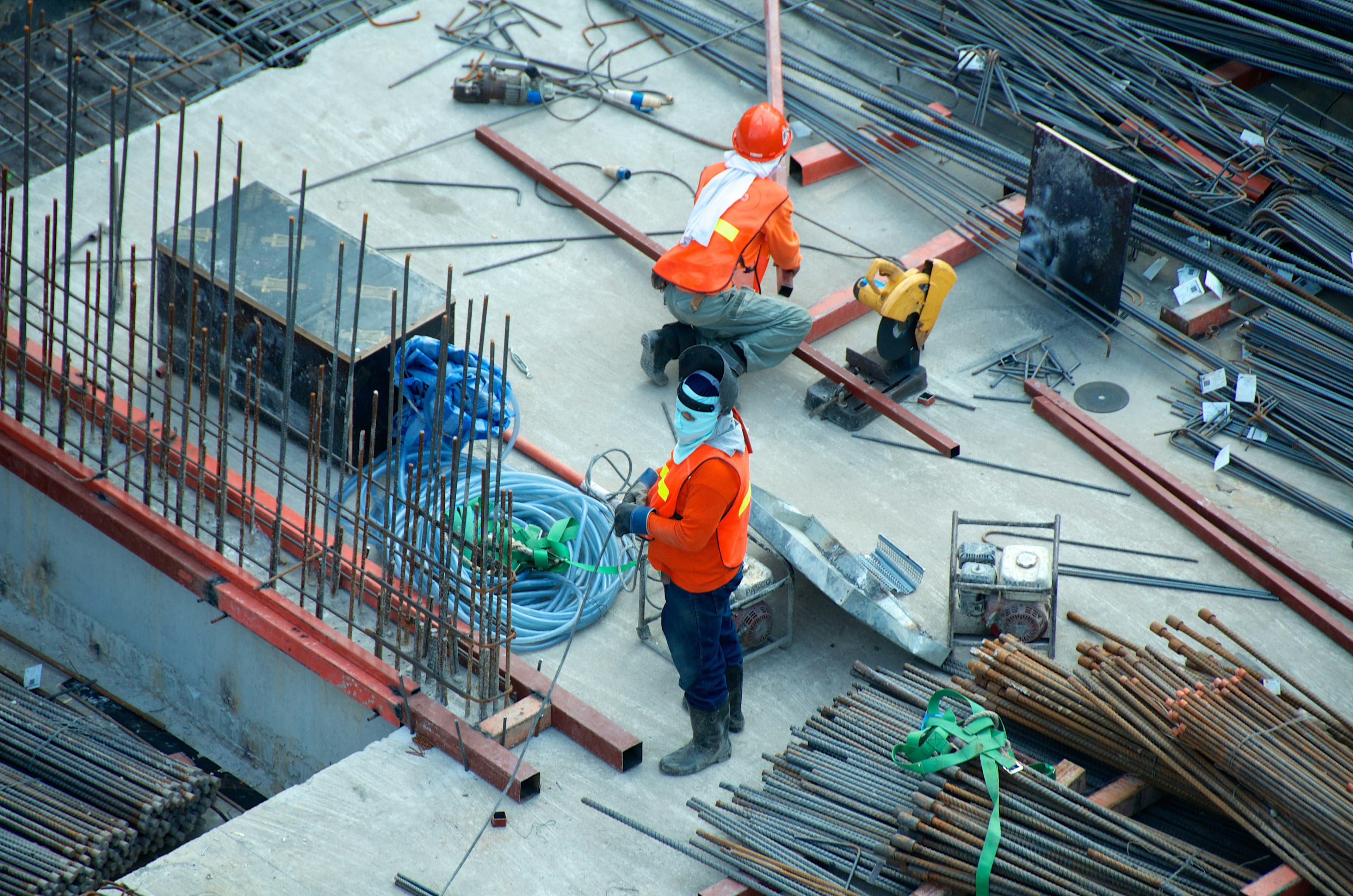
Why construction firms struggle to connect field execution with back-office control
Construction operations run across jobsites, trailers, regional offices, warehouses, subcontractor networks, and corporate finance teams. The field generates daily production data, labor hours, equipment usage, material receipts, safety observations, and change events. The back office must convert that activity into payroll, job cost, billing, procurement, compliance records, and executive reporting. When those workflows are disconnected, project teams work from partial information and finance closes the books with delays and manual reconciliation.
Many contractors still rely on a mix of spreadsheets, email approvals, point solutions for field reporting, and accounting systems that were not designed to absorb real-time project activity. The result is familiar: superintendents submit daily logs late, purchase orders are created after materials arrive, timecards require rework, committed cost visibility is incomplete, and project managers discover margin erosion only after the reporting period closes.
Construction ERP automation addresses this gap by creating a controlled workflow between field capture and back-office processing. Instead of treating field systems and ERP as separate environments, the operating model links project execution, cost control, procurement, payroll, equipment, subcontract management, and financial reporting into one governed process. The objective is not full standardization of every project practice. It is reliable operational visibility, faster transaction flow, and fewer manual handoffs across the project lifecycle.
Where operational bottlenecks usually appear
- Daily field reports are entered inconsistently, making production and cost tracking unreliable.
- Labor hours are captured in one system while payroll, union rules, and job costing are processed elsewhere.
- Material requests, purchase orders, receipts, and vendor invoices do not reconcile cleanly at the job level.
- Change orders are tracked outside ERP, delaying revenue recognition and committed cost updates.
- Equipment usage and maintenance data are disconnected from project cost and fleet planning.
- Subcontractor compliance documents are managed manually, creating payment and audit risk.
- Executives receive lagging reports because project data must be consolidated manually at month end.
What construction ERP automation should connect
In construction, automation should be designed around operational handoffs rather than isolated transactions. A field report matters because it updates labor cost, production progress, equipment utilization, and potential billing support. A material receipt matters because it affects committed cost, inventory availability, vendor matching, and project schedule continuity. The ERP architecture should therefore connect workflows that share operational consequences.
For general contractors, specialty contractors, and heavy civil firms, the most important integration points usually include project management, estimating, job costing, payroll, accounts payable, procurement, equipment, inventory, document control, and executive reporting. Some firms also need stronger links to CRM, service management, BIM platforms, scheduling tools, and vertical SaaS applications for safety, quality, or subcontractor prequalification.
| Workflow Area | Field Trigger | Back-Office Impact | Automation Opportunity | Operational Risk if Disconnected |
|---|
| Labor and time capture | Crew hours entered from jobsite | Payroll, union calculations, job cost posting | Mobile time entry with approval routing and ERP posting | Payroll errors, delayed cost visibility, rework |
| Material management | Delivery received on site | PO matching, inventory update, AP processing | Receipt capture tied to PO and project cost code | Invoice disputes, duplicate purchases, stockouts |
| Change management | Scope deviation identified in field | Budget revision, billing, margin forecast | Workflow for change request, approval, and cost commitment update | Unbilled work, margin leakage, disputes |
| Equipment usage | Machine hours logged on project | Internal cost allocation, maintenance planning | Telematics or mobile logs integrated to ERP equipment module | Underbilling, poor utilization, maintenance delays |
| Subcontract administration | Progress update or compliance expiration | Payment release, retention, risk controls | Automated compliance checks and pay application workflow | Payment holds, audit findings, legal exposure |
| Project reporting | Daily production and issue updates | Forecasting, WIP, executive dashboards | Standardized data model feeding ERP analytics | Late decisions, inaccurate forecasts, weak governance |
Core construction ERP workflows that benefit from automation
1. Field time, payroll, and job costing
Time capture is one of the highest-value automation areas because it affects payroll accuracy, labor compliance, project cost, and productivity reporting at the same time. In many firms, foremen submit hours through spreadsheets or text messages, payroll teams rekey the data, and project accountants later correct coding errors. This creates a chain of delay and weakens confidence in labor cost reports.
A stronger workflow uses mobile or tablet-based crew entry with predefined cost codes, equipment associations, union classifications, and approval rules. Once approved, the transaction should post to payroll and job cost in a controlled sequence. This reduces duplicate entry and gives project managers earlier visibility into labor burn against budget. The tradeoff is that field coding discipline must improve. If cost code structures are overly complex, adoption will suffer.
2. Procurement, inventory, and material control
Construction procurement is often fragmented across project managers, buyers, warehouse teams, and field supervisors. Material requests may begin informally, purchase orders may be issued after delivery, and receipts may not be recorded at the project level. This weakens committed cost reporting and makes it difficult to distinguish true shortages from poor transaction discipline.
ERP automation can standardize the sequence from material request to approval, PO creation, receipt, three-way match, and invoice payment. For self-performing contractors and firms with yards or warehouses, inventory logic becomes more important. Transfers between warehouse and jobsite, returns, reserved stock, and substitute materials should all be visible in the ERP record. The goal is not retail-style inventory precision on every consumable item. It is enough control to reduce emergency purchasing, duplicate orders, and invoice exceptions.
3. Change orders and revenue protection
Change management is a common source of margin loss because field teams identify extra work before commercial terms are approved. If the ERP does not capture pending changes, project forecasts remain incomplete and executives underestimate exposure. Construction ERP automation should support a staged workflow: issue identification, cost estimate, internal review, customer submission, approval status, and conversion to budget and billing records.
This workflow should also distinguish approved, pending, and disputed changes. Treating all change activity as booked revenue creates reporting distortion. Treating none of it as forecast exposure creates operational blindness. Firms need governance rules that reflect their contract model, revenue recognition policy, and risk tolerance.
4. Equipment and asset utilization
For heavy civil, utility, and specialty contractors, equipment is both a cost center and a production constraint. Yet equipment usage is often tracked separately from project accounting. That means internal rental charges, maintenance schedules, fuel consumption, and idle time are not visible in the same reporting environment as project performance.
An integrated ERP workflow can connect equipment assignments, usage logs, maintenance events, and cost allocation to jobs. Some firms extend this with telematics or fleet platforms. The practical benefit is not just better utilization reporting. It is improved planning for preventive maintenance, more accurate project costing, and fewer disputes over internal equipment charges.
Reporting and analytics requirements for construction operations
Construction leaders need reporting that reflects both transaction accuracy and project context. Standard financial statements are necessary, but they are not enough for operational control. ERP analytics should support job cost by phase and cost code, committed versus actual cost, labor productivity, equipment utilization, subcontract exposure, change order status, cash flow by project, and work-in-progress reporting.
The challenge is that analytics quality depends on workflow standardization. If one region uses different cost code logic, if field teams delay receipts, or if pending changes are tracked outside the system, dashboards will look complete while underlying data remains inconsistent. Executive teams should therefore treat reporting design as a process governance exercise, not only a BI project.
- Project managers need near-real-time cost and commitment visibility by job and phase.
- Controllers need reliable payroll, AP, AR, WIP, and revenue recognition data.
- Operations leaders need production, labor efficiency, equipment, and issue trend reporting.
- Executives need portfolio-level margin, backlog, cash, risk, and forecast views.
- Compliance teams need audit trails for approvals, certified payroll, subcontractor documentation, and contract changes.
Cloud ERP considerations for construction firms
Cloud ERP is increasingly relevant in construction because operations are distributed and project teams need access from jobsites, regional offices, and shared service centers. A cloud model can simplify deployment, improve version consistency, and support mobile workflows more effectively than heavily customized on-premise environments. It also makes it easier to connect vertical SaaS tools through APIs and integration platforms.
However, cloud ERP does not remove the need for process discipline. Construction firms still need to define approval hierarchies, master data ownership, project coding standards, and offline or low-connectivity procedures for field environments. They also need to evaluate whether specialized construction functions are native to the ERP, delivered through partner applications, or dependent on custom integration.
A practical selection approach compares three models: construction-specific ERP suites, broad enterprise ERP with construction extensions, and a composable architecture that combines ERP with vertical SaaS for field operations, safety, document control, or equipment. The right choice depends on scale, complexity, internal IT maturity, and how much process variation the business can support.
When vertical SaaS adds value
- Safety management platforms can improve incident, inspection, and corrective action workflows.
- Field productivity and daily reporting tools may offer stronger mobile usability than core ERP modules.
- Subcontractor compliance applications can centralize insurance, lien waiver, and qualification controls.
- Equipment telematics platforms can provide richer utilization and maintenance data than ERP alone.
- Document management and drawing control tools may better support versioning and field collaboration.
The tradeoff is integration complexity. Every additional application creates another dependency for master data synchronization, user provisioning, workflow ownership, and reporting consistency. Firms should avoid building a fragmented stack that recreates the same disconnects ERP was meant to solve.
Compliance, governance, and standardization in construction ERP automation
Construction ERP automation must support governance requirements that vary by project type, geography, labor model, and customer segment. Public sector work may require certified payroll, prevailing wage controls, and stronger audit documentation. Union environments require accurate classification and rate handling. Multi-entity firms need intercompany controls, delegated approvals, and consistent financial close procedures.
Workflow standardization is essential, but it should be applied selectively. Estimating, cost coding, procurement approvals, subcontract compliance, and financial close usually benefit from tighter standard rules. Field execution methods may need more flexibility because project conditions differ. The implementation objective is to standardize data and control points without forcing every jobsite to operate identically.
- Define a common project, phase, and cost code structure where cross-project reporting is required.
- Establish approval thresholds for purchases, subcontract commitments, and change orders.
- Assign ownership for vendor master data, item records, equipment records, and labor classifications.
- Maintain audit trails for payroll edits, invoice exceptions, budget transfers, and contract changes.
- Document exception workflows for urgent field purchases, emergency repairs, and schedule-critical substitutions.
AI and automation relevance in construction ERP
AI in construction ERP is most useful when applied to narrow operational problems with structured outcomes. Examples include invoice data extraction, anomaly detection in time entry, predictive maintenance signals from equipment data, classification of field notes, and forecasting support based on historical project patterns. These uses can reduce manual review effort and improve exception handling.
The limitation is data quality. If cost codes are inconsistent, if field notes are incomplete, or if change events are not logged in a standard way, AI outputs will be difficult to trust. Construction firms should therefore prioritize workflow automation and data governance before expecting advanced analytics or AI-driven recommendations to improve project control.
A practical roadmap starts with rules-based automation for approvals, posting, matching, and alerts. Once those workflows are stable, firms can add AI-supported capabilities where there is enough transaction volume and historical consistency to justify them.
Implementation challenges and executive guidance
Construction ERP programs often fail when they are framed as finance system upgrades instead of operating model changes. The field sees the project as administrative overhead, while finance expects immediate data quality improvements without redesigning upstream workflows. Successful programs align project operations, accounting, procurement, payroll, equipment, and IT around a shared process model.
Master data is a common obstacle. If project structures, cost codes, vendor records, labor classes, and equipment IDs are inconsistent before implementation, automation will amplify confusion rather than reduce it. Integration design is another challenge. Firms need clear decisions on which system owns each transaction, which events trigger updates, and how exceptions are resolved.
Change management should focus on role-specific adoption. Superintendents need fast mobile entry and minimal duplicate work. Project managers need reliable commitment and forecast views. Controllers need clean posting logic and close discipline. Executives need a governance model that balances standardization with project-level flexibility.
Executive priorities for a phased rollout
- Start with high-friction workflows such as time capture, procurement approvals, and job cost visibility.
- Standardize core data structures before expanding automation across regions or business units.
- Use pilot projects to validate field usability, approval timing, and reporting accuracy.
- Measure success through cycle time reduction, exception rates, close speed, and forecast reliability.
- Limit customization unless it supports a clear competitive or compliance requirement.
- Plan for integration governance, not just software deployment.
Building a scalable operating model for construction ERP automation
As construction firms grow through new project types, geographies, or acquisitions, disconnected workflows become more expensive. Shared services struggle to support inconsistent processes, executives lose confidence in portfolio reporting, and local teams create workarounds that increase risk. A scalable ERP operating model gives the business a common transaction backbone while allowing controlled variation where project delivery requires it.
For enterprise construction organizations, the long-term value of ERP automation is not limited to labor savings. It is the ability to connect field execution with financial control, procurement discipline, equipment planning, and portfolio-level decision making. That connection improves operational visibility, supports more consistent governance, and creates a stronger foundation for analytics, cloud expansion, and selective use of vertical SaaS applications.
Construction firms evaluating ERP automation should therefore begin with workflow mapping, not feature lists. Identify where field events become financial transactions, where approvals stall, where data is re-entered, and where reporting loses credibility. Those are the points where ERP automation delivers the most practical value.