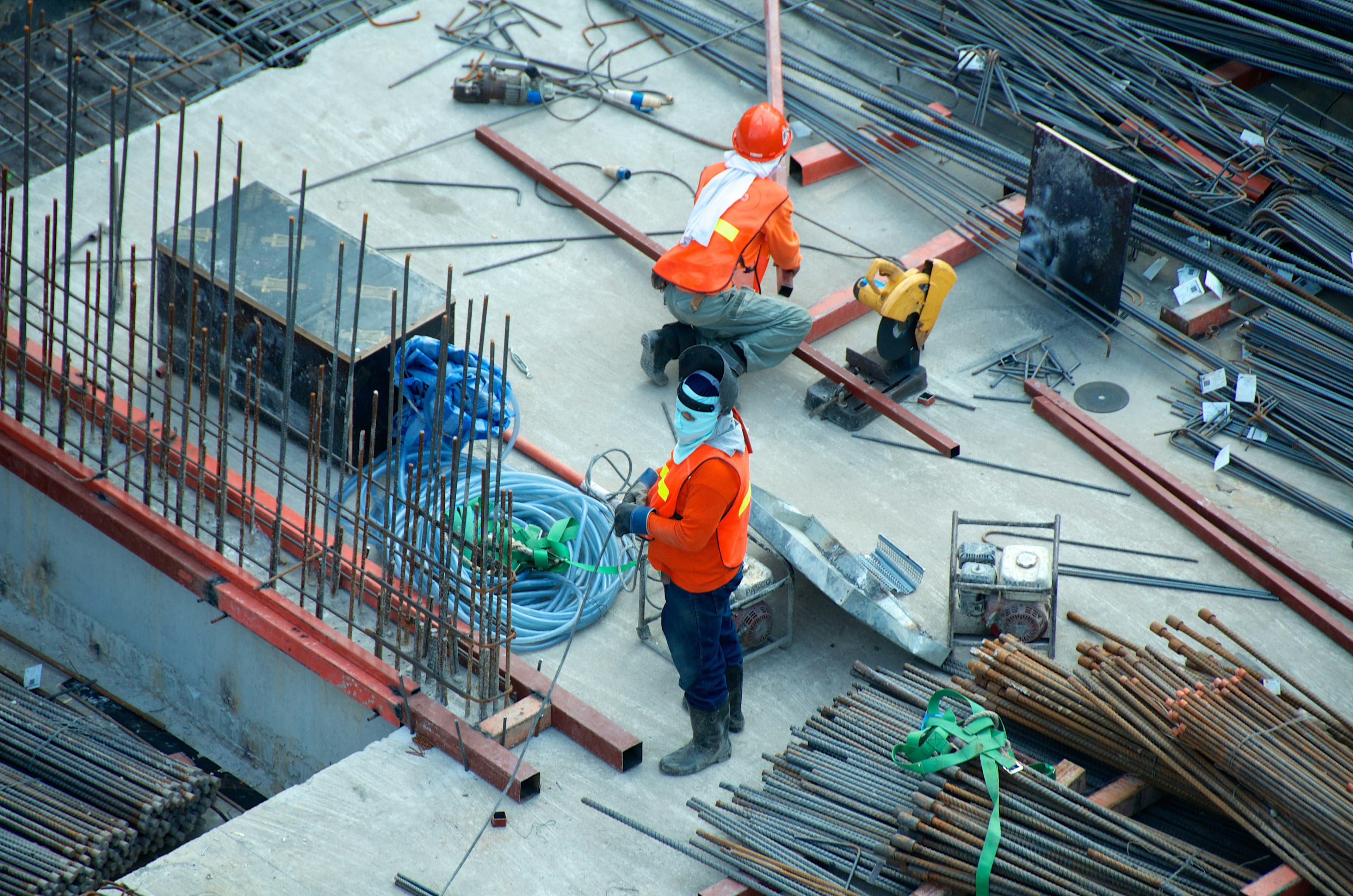
Construction ERP digital upgrade decisions are rarely just software decisions
For construction companies, ERP modernization usually sits at the intersection of project controls, procurement, subcontractor management, equipment utilization, field reporting, finance, and compliance. That makes the upgrade decision more complex than a standard back-office replacement. In many firms, the real question is not simply whether SAP, Odoo, or Microsoft Dynamics has more features. The more important question is which platform can support project-based operations with acceptable implementation risk, realistic total cost, and enough flexibility to adapt to changing delivery models.
This comparison focuses on three common paths: staying with or modernizing a legacy SAP environment, moving to modern Odoo, or standardizing on Microsoft Dynamics. Each option can work in construction, but they serve different operating models. Legacy SAP often remains strong in large, process-heavy enterprises with mature finance and governance requirements. Odoo appeals to firms seeking modular flexibility, lower entry cost, and faster adaptation. Dynamics is often evaluated by organizations that want a broad enterprise platform with strong Microsoft ecosystem alignment and a balance between structure and usability.
The right choice depends on company size, project complexity, internal IT maturity, reporting requirements, geographic footprint, and appetite for process redesign. Construction leaders should evaluate not only current fit, but also whether the ERP can support future needs such as mobile field workflows, AI-assisted forecasting, connected procurement, and multi-entity project governance.
Executive snapshot: where each platform tends to fit
| Platform | Best-fit construction profile | Primary advantage | Primary limitation | Typical decision driver |
|---|---|---|---|---|
| Legacy SAP / SAP modernization path | Large enterprises, multi-country contractors, highly governed finance environments | Deep enterprise controls, mature financial architecture, strong process governance | Higher cost, heavier implementation, more complex change management | Need for enterprise-grade control and continuity |
| Odoo | Mid-market contractors, specialty builders, growing groups needing flexibility | Modular architecture, lower cost of entry, adaptable workflows | May require partner-led construction-specific tailoring for complex enterprise scenarios | Need for agility and cost-efficient modernization |
| Microsoft Dynamics | Mid-market to upper mid-market firms, Microsoft-centric organizations, diversified project businesses | Strong ecosystem integration, balanced enterprise capability, familiar user experience | Construction depth may depend on ISV extensions and implementation design | Need for broad platform alignment and manageable modernization |
How construction requirements change the ERP evaluation
Construction ERP selection differs from manufacturing or retail because project execution drives the economics. Revenue recognition, committed cost visibility, change orders, subcontractor billing, retention, equipment costing, and job-level forecasting all need to work together. A system that is strong in general finance but weak in project controls can create reporting gaps. Likewise, a system that is flexible in field operations but weak in auditability can create governance issues as the business scales.
- Project-centric accounting and job cost control
- Procurement tied to budgets, commitments, and site-level consumption
- Subcontractor management, compliance, and payment workflows
- Change order governance and margin impact tracking
- Equipment, fleet, and asset utilization visibility
- Mobile field data capture for time, progress, and issues
- Multi-entity and multi-division reporting
- Integration with estimating, scheduling, payroll, CRM, and document systems
These requirements create different strengths across SAP, Odoo, and Dynamics. The comparison should therefore focus less on generic ERP checklists and more on implementation fit for construction operating realities.
Pricing comparison: license cost is only part of the budget
Construction firms often underestimate the difference between software subscription cost and full program cost. ERP economics include implementation services, process redesign, data migration, integrations, testing, training, support, and post-go-live optimization. In enterprise construction environments, these non-license costs often exceed first-year software fees.
| Platform | Software pricing profile | Implementation cost profile | Customization cost tendency | 5-year TCO outlook |
|---|---|---|---|---|
| Legacy SAP / SAP modernization | High to very high, depending on modules, users, and deployment model | High due to architecture complexity, governance, and specialist consulting | High if legacy custom code must be retained or rebuilt | Usually highest, but can be justified in large-scale enterprises |
| Odoo | Low to moderate entry cost, modular pricing can be favorable | Moderate, though can rise if extensive construction-specific tailoring is required | Moderate and often more controllable for targeted workflow changes | Often lowest to mid-range, especially for mid-market firms |
| Microsoft Dynamics | Moderate to high depending on licensing tier, apps, and user mix | Moderate to high, especially with ISV add-ons and integration scope | Moderate to high depending on extension strategy | Mid to high, generally below SAP but above lean Odoo deployments |
For buyers, the practical takeaway is that SAP tends to require the largest long-term investment but may align with organizations that already operate at enterprise scale. Odoo can reduce entry cost and shorten the path to modernization, but budget discipline is still needed if the implementation relies on many custom workflows. Dynamics often lands in the middle: more structured and ecosystem-rich than a lightweight deployment, but usually less expensive and less rigid than a large SAP program.
Implementation complexity and timeline
Implementation complexity in construction is driven by project accounting design, procurement controls, field process digitization, and integration dependencies. Legacy SAP environments often carry years of customizations, local process exceptions, and reporting logic that make modernization difficult. Odoo implementations can move faster when the organization is willing to simplify processes. Dynamics projects typically depend on how much industry-specific functionality is delivered through standard capabilities versus partner extensions.
| Platform | Implementation complexity | Typical timeline | Change management burden | Key risk area |
|---|---|---|---|---|
| Legacy SAP / SAP modernization | High | 9-24+ months | High | Replicating legacy complexity instead of redesigning processes |
| Odoo | Moderate | 4-12 months | Moderate | Underestimating construction-specific process design and controls |
| Microsoft Dynamics | Moderate to high | 6-15 months | Moderate to high | Overreliance on add-ons without clear solution architecture |
SAP modernization is usually the most demanding path because the organization must decide what to retire, what to redesign, and what to preserve for compliance or reporting continuity. Odoo can be faster, especially for firms replacing fragmented systems, spreadsheets, and disconnected project tools. Dynamics often offers a more structured implementation path than Odoo, but complexity rises quickly when construction-specific requirements are layered through multiple extensions.
Construction functionality fit: standard capability versus partner-led design
None of these platforms should be evaluated in isolation from implementation partners and industry templates. Construction ERP success depends on how well the final solution handles estimating handoff, project budgets, commitments, subcontracts, progress billing, retention, equipment, and cost forecasting. SAP can support these needs at enterprise scale, but often through substantial design effort and specialized expertise. Odoo can be shaped around operational workflows with relative flexibility, though advanced construction controls may require careful module selection and custom development. Dynamics can provide a strong core, but many construction firms depend on partner ecosystems or ISVs to close industry gaps.
Legacy SAP strengths and weaknesses in construction
- Strengths: strong financial governance, multi-entity control, auditability, enterprise reporting, global operating support
- Strengths: suitable for large contractors with complex procurement and compliance structures
- Weaknesses: expensive to modernize, difficult to simplify if legacy customizations are extensive
- Weaknesses: user experience and field adoption may lag unless supported by modern interfaces and mobility layers
Odoo strengths and weaknesses in construction
- Strengths: modular deployment, adaptable workflows, lower barrier to modernization, good fit for process standardization
- Strengths: can unify CRM, procurement, inventory, accounting, field service, and project workflows in one platform
- Weaknesses: enterprise-grade construction depth may depend on implementation partner capability
- Weaknesses: governance and controls must be designed carefully for larger, more regulated organizations
Dynamics strengths and weaknesses in construction
- Strengths: strong Microsoft ecosystem alignment, familiar interface, broad business application coverage, solid reporting options
- Strengths: good fit for organizations already invested in Microsoft 365, Power Platform, and Azure
- Weaknesses: construction-specific depth often relies on ISVs or custom extensions
- Weaknesses: architecture can become fragmented if too many apps and add-ons are assembled without governance
Integration comparison: project ecosystems matter more than standalone ERP features
Construction firms rarely operate ERP as a closed system. Estimating tools, scheduling platforms, payroll systems, document management, BIM environments, procurement portals, and field apps all influence ERP value. Integration quality therefore matters as much as native functionality.
| Platform | Integration posture | Common ecosystem advantage | Common integration challenge |
|---|---|---|---|
| Legacy SAP / SAP modernization | Strong enterprise integration capability with formal architecture options | Works well in large heterogeneous enterprise landscapes | Integration projects can be expensive and slow to change |
| Odoo | Flexible API-driven integration approach with modular adaptability | Good for connecting operational workflows quickly | Connector quality and long-term maintainability vary by partner and custom code quality |
| Microsoft Dynamics | Strong integration across Microsoft stack and broad connector ecosystem | Natural fit with Power BI, Teams, Excel, Azure, and Power Automate | Non-Microsoft construction systems may still require specialized integration work |
If the construction business already relies heavily on Microsoft collaboration, reporting, and automation tools, Dynamics often gains practical advantages. If the organization needs a more adaptable operational core and is comfortable with partner-led integration design, Odoo can be attractive. SAP remains strong where enterprise integration governance, master data discipline, and complex system landscapes are already established.
Customization analysis: flexibility versus maintainability
Construction companies often believe their processes are too unique for standard ERP. In practice, some differentiation is real, but much of the complexity comes from historical workarounds. The best ERP programs distinguish between strategic differentiation and avoidable customization.
SAP supports deep customization, but that flexibility can become a liability if the organization carries forward years of technical debt. Odoo is often attractive because targeted workflow changes can be implemented more quickly, but governance is still essential to avoid creating a loosely controlled system. Dynamics offers extensibility with a more structured platform model, though extension sprawl can create support and upgrade challenges.
- Choose SAP when process control and enterprise consistency matter more than speed of change
- Choose Odoo when operational flexibility and phased modernization are priorities
- Choose Dynamics when extensibility is needed within a broader Microsoft platform strategy
- In all cases, reduce customizations that only preserve outdated approval chains or spreadsheet-era reporting habits
AI and automation comparison
AI in construction ERP is still most valuable when applied to practical use cases: invoice capture, anomaly detection, forecasting support, workflow automation, document classification, and reporting assistance. Buyers should be cautious about broad AI claims and instead assess where automation can reduce manual effort in project and finance operations.
| Platform | AI and automation maturity | Most realistic near-term use cases | Buyer caution |
|---|---|---|---|
| Legacy SAP / SAP modernization | Strong enterprise automation potential, especially in large process environments | Financial controls, procurement automation, analytics, exception handling | Value depends on data quality and modernization of surrounding processes |
| Odoo | Practical automation potential through workflows and partner-led enhancements | Approvals, document routing, task automation, operational alerts | Advanced AI depth may vary significantly by deployment and ecosystem choices |
| Microsoft Dynamics | Strong automation potential through Microsoft AI and Power Platform ecosystem | Workflow automation, reporting assistance, document processing, forecasting support | Benefits depend on licensing scope, data model quality, and governance across apps |
For many construction firms, Dynamics currently offers a practical advantage in AI-adjacent automation because of the surrounding Microsoft stack. SAP can be powerful in larger enterprise scenarios with disciplined data and process maturity. Odoo can still deliver meaningful automation, especially in operational workflows, but buyers should validate exactly what is native, what is partner-built, and what will require custom development.
Deployment and scalability analysis
Deployment strategy affects security, upgrade cadence, IT overhead, and global consistency. Construction firms with distributed sites and mobile users often benefit from cloud-first architectures, but some enterprises still maintain hybrid or controlled deployment requirements due to compliance, regional operations, or legacy dependencies.
SAP is generally strongest for very large, complex organizations that need deep governance across entities, countries, and business units. Odoo scales well for many mid-market and growing organizations, especially when process complexity is manageable and architecture discipline is maintained. Dynamics scales effectively across mid-market and upper mid-market environments and can support larger enterprises, particularly where Microsoft platform standardization is already in place.
- SAP: strongest for large-scale governance, but often with higher administrative and implementation overhead
- Odoo: scalable for growth, acquisitions, and phased rollouts when solution design remains disciplined
- Dynamics: scalable across business units with strong cloud and ecosystem support, though industry depth should be validated
Migration considerations: the upgrade path matters as much as the destination
ERP migration in construction is not just a technical data move. It is a redesign of how jobs, vendors, cost codes, contracts, assets, and reporting structures are governed. Legacy SAP customers face a particularly important choice: modernize in place, reimplement on a cleaner architecture, or move to a different platform entirely. Each path has different risk and cost implications.
- From legacy SAP to modern SAP: lower organizational disruption than a platform switch, but often high cost and complexity
- From legacy SAP to Odoo: potentially significant cost and usability gains, but requires careful redesign of controls and reporting
- From legacy SAP to Dynamics: often attractive for Microsoft-centric firms, but migration complexity remains substantial
- From fragmented systems to Odoo or Dynamics: can deliver faster operational unification than a large SAP-style program
Data migration should focus on quality, not volume. Construction firms often carry inconsistent job structures, duplicate vendors, outdated cost codes, and incomplete project history. A selective migration strategy is usually more effective than moving every historical record. Executive teams should also plan for parallel reporting periods, field training, and post-go-live support during active project cycles.
Decision guidance for executives
There is no universal winner across legacy SAP, Odoo, and Dynamics for construction ERP modernization. The right decision depends on what the business is optimizing for.
- Choose a SAP modernization path if your organization is large, highly regulated, globally distributed, and dependent on deep financial governance and enterprise continuity
- Choose Odoo if you need a more agile and cost-conscious modernization path, especially in mid-market construction environments willing to standardize and simplify processes
- Choose Dynamics if your business wants a balanced enterprise platform with strong Microsoft alignment, broad integration options, and manageable modernization complexity
- Avoid selecting any platform based only on software demos; insist on scenario-based workshops covering job cost, subcontract billing, change orders, procurement, and field reporting
- Evaluate implementation partners as rigorously as the software itself, because construction fit is often determined by solution design quality
A disciplined selection process should include future-state process mapping, integration architecture review, data governance planning, and a realistic total cost model over at least five years. For most construction firms, the best ERP decision is the one that improves project visibility, reduces manual reconciliation, and supports operational control without creating an implementation burden the business cannot absorb.
Final assessment
Legacy SAP remains a credible option for construction enterprises that need scale, control, and continuity, but it is usually the most demanding path in cost and complexity. Odoo offers a flexible and often more economical route for firms that want to modernize quickly and are prepared to design the right controls. Microsoft Dynamics sits between those positions, offering a broad enterprise platform with strong ecosystem advantages, especially for organizations already standardized on Microsoft technologies.
For construction leaders, the most effective decision framework is not feature volume. It is operational fit, implementation realism, and the ability to support project execution with cleaner data, stronger controls, and better cross-functional visibility.

