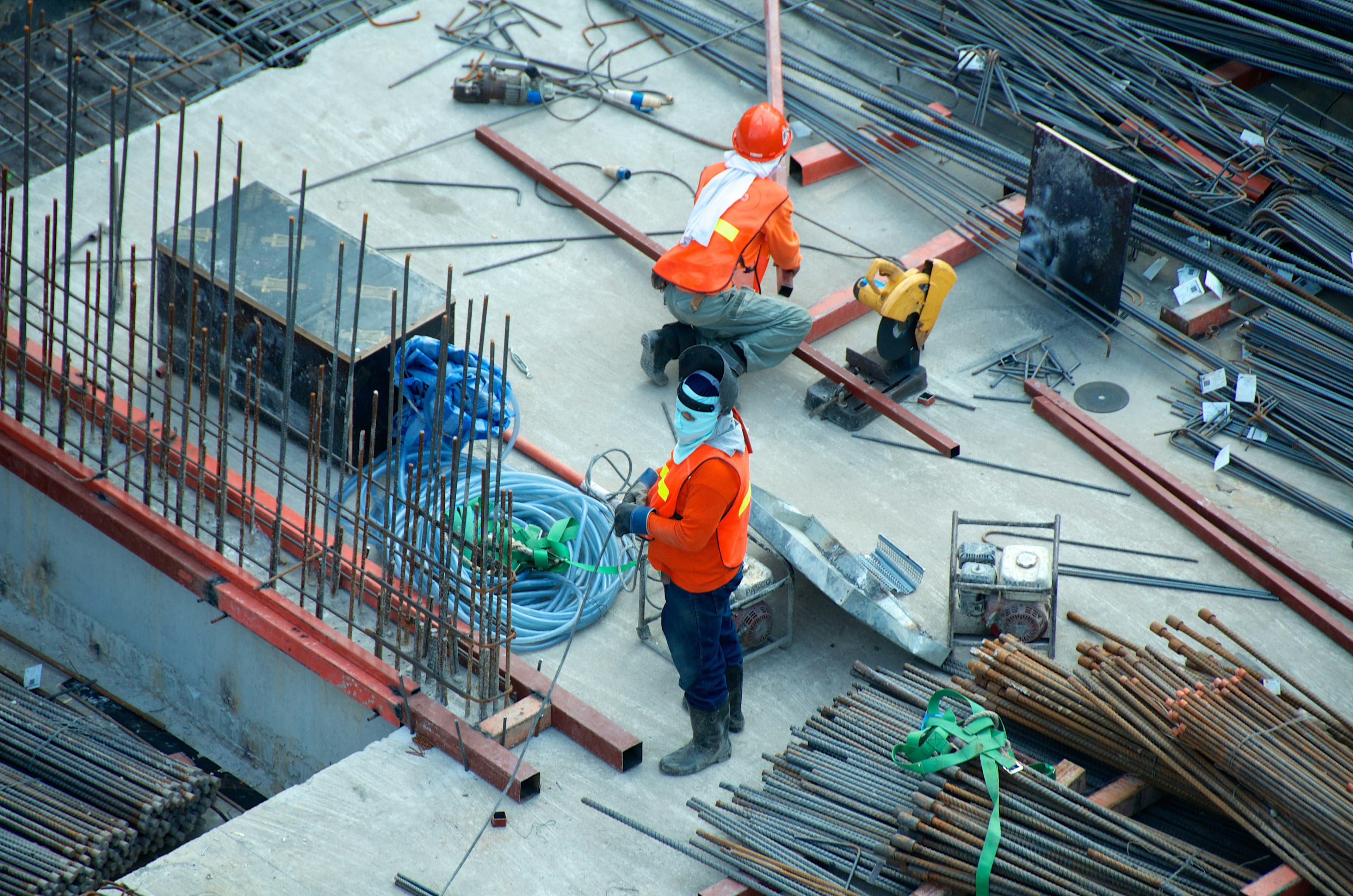
Why construction operations become fragmented across projects
Construction companies rarely struggle because a single project workflow is difficult to understand. The larger issue is that every project develops its own operating pattern. Estimating may live in one system, procurement in email and spreadsheets, subcontractor documentation in shared drives, field reporting in mobile apps, and financial controls in accounting software. As project count increases, leadership loses a consistent view of cost exposure, schedule risk, committed spend, labor productivity, and compliance status.
This fragmentation creates operational blind spots between office and field teams. Project managers may know local conditions on their jobs, but executives often lack a standardized cross-project view. Finance may close the month with incomplete accruals. Procurement may not see material demand shifts early enough. Equipment managers may not know where assets are underutilized. Safety and compliance teams may discover documentation gaps only when an audit, claim, or incident occurs.
Construction ERP addresses this problem by creating a shared operational system for project execution, cost control, procurement, subcontract management, inventory, equipment, billing, and reporting. The value is not simply software consolidation. The real benefit is operational visibility: a reliable way to see how work is progressing across projects using common workflows, common data definitions, and common controls.
Common sources of workflow fragmentation in construction
- Separate estimating, project management, accounting, payroll, and procurement tools with inconsistent job and cost code structures
- Manual handoffs between bid, budget, contract, change order, purchasing, and billing processes
- Project-specific spreadsheet tracking for commitments, RFIs, submittals, and progress updates
- Delayed field reporting from supervisors, foremen, and subcontractors
- Limited visibility into material availability, equipment allocation, and labor utilization across active jobs
- Inconsistent approval workflows for purchase orders, subcontractor invoices, and change events
- Weak document governance for insurance certificates, lien waivers, safety records, and compliance documentation
What operations visibility means in a construction ERP environment
Operations visibility in construction is the ability to monitor project and enterprise performance using current, structured, and comparable data. It means executives can review backlog, committed cost, earned revenue, cash flow exposure, labor productivity, equipment usage, subcontractor performance, and compliance status without waiting for manual reconciliation. It also means project teams can act on issues before they become margin erosion or schedule delay.
A construction ERP platform should connect preconstruction, project execution, and financial management rather than treating them as separate reporting domains. When estimate structures map to project budgets, purchase commitments, field production, and billing milestones, the organization gains traceability from bid assumptions to actual outcomes. That traceability is essential for managing multiple projects with different contract types, geographies, crews, and subcontractor networks.
Visibility is also a governance issue. If each project manager defines statuses, cost categories, and approval paths differently, enterprise reporting becomes unreliable. ERP standardization does not eliminate project-level flexibility, but it establishes a controlled operating model so that exceptions are visible rather than hidden.
Core visibility domains construction firms should monitor
| Visibility Domain | Operational Questions | ERP Data Sources | Business Impact |
|---|
| Job cost control | Are actuals, commitments, and forecasted costs aligned by cost code and phase? | Budgets, AP, payroll, purchase orders, subcontracts, change orders | Protects margin and improves forecast accuracy |
| Procurement and materials | Which materials are delayed, overcommitted, or purchased outside approved workflows? | Requisitions, POs, vendor schedules, inventory, receiving | Reduces schedule disruption and maverick spend |
| Field execution | Are daily reports, production quantities, labor hours, and issues current? | Mobile field logs, timesheets, production tracking, issue logs | Improves schedule control and labor productivity analysis |
| Subcontractor management | Which subcontractors are behind, overbilling, or missing compliance documents? | Subcontracts, pay applications, COIs, lien waivers, performance records | Lowers payment risk and compliance exposure |
| Equipment utilization | Where are assets deployed, idle, or under maintenance? | Equipment assignments, telematics, maintenance records, job charges | Improves asset productivity and rental decisions |
| Financial performance | How do WIP, revenue recognition, cash flow, and backlog compare across projects? | GL, AR, billing, WIP schedules, forecasting | Supports executive planning and lender reporting |
| Compliance and safety | Are permits, safety incidents, certifications, and contract obligations current? | Document management, incident logs, vendor compliance records | Reduces legal, audit, and insurance risk |
Construction ERP workflows that reduce fragmentation
The most effective construction ERP programs focus on workflow continuity rather than isolated modules. Fragmentation usually appears at handoff points: estimate to budget, budget to procurement, procurement to field execution, field progress to billing, and project activity to financial close. ERP design should prioritize these transitions because that is where data quality, accountability, and timing often break down.
For example, if estimators use one cost structure and project teams reclassify budgets after award, historical comparison becomes weak. If field teams record production in free-form notes rather than structured quantities, earned progress cannot be compared to labor and material consumption. If subcontractor invoices are approved without matching to committed values, change orders, and compliance status, cost leakage becomes difficult to detect.
Priority workflows to standardize in construction ERP
- Estimate-to-budget transfer with controlled cost code mapping and version history
- Requisition-to-purchase order workflow with approval thresholds, vendor controls, and delivery tracking
- Subcontract creation, change management, pay application review, and retention tracking
- Daily field reporting tied to labor, equipment, production quantities, delays, and safety observations
- Time capture and payroll integration by project, phase, crew, and cost code
- Material receiving and inventory issue workflows for warehouse, yard, and jobsite consumption
- Change event to change order workflow with pricing, approval, and owner billing traceability
- Progress billing, AIA billing, and revenue recognition workflows linked to contract terms and project status
- Month-end WIP review with standardized forecast updates and variance explanations
Operational bottlenecks that limit cross-project visibility
Many construction firms assume visibility problems are reporting problems. In practice, reporting issues usually reflect workflow bottlenecks upstream. If field data arrives late, dashboards are late. If commitments are not entered consistently, cost reports are incomplete. If project teams bypass procurement controls to keep work moving, material exposure becomes difficult to quantify. ERP can improve visibility only when the underlying operating model is disciplined enough to produce usable data.
A common bottleneck is decentralized project administration. Project managers often build local workarounds to meet schedule demands, especially when corporate systems are slow or rigid. These workarounds may help one project in the short term but create enterprise inconsistency. Another bottleneck is weak master data governance. If vendors, cost codes, equipment IDs, and project phases are not standardized, cross-project analysis becomes unreliable.
There is also a timing problem. Construction decisions are made daily, but many firms still operate with weekly or monthly data refresh cycles. By the time cost overruns appear in formal reports, corrective action options are narrower. ERP visibility improves when mobile field capture, procurement updates, and financial postings are integrated into a near-real-time operating rhythm.
Typical bottlenecks to address before scaling ERP visibility
- Delayed approval of purchase orders and subcontract changes
- Manual re-entry of field hours, production quantities, and equipment usage
- Unstructured change event tracking outside the ERP system
- Inconsistent receiving and inventory issue processes at jobsites
- Late subcontractor compliance verification and document collection
- Month-end cost forecasting based on spreadsheets rather than system workflows
- Project-specific naming conventions that break enterprise reporting
Inventory, supply chain, and equipment considerations in construction ERP
Construction inventory management is more complex than standard warehouse replenishment. Materials may move from supplier to yard, from yard to project, between projects, or directly to a subcontractor. Some items are high-value and serialized, while others are bulk commodities with volatile pricing and uncertain lead times. Without ERP visibility into requisitions, purchase commitments, receipts, transfers, and usage, firms struggle to understand true material exposure across projects.
Supply chain visibility matters most when multiple projects compete for the same materials, vendors, and delivery windows. A construction ERP system should support project-specific demand planning, committed spend tracking, lead-time monitoring, and exception alerts for delayed or partial deliveries. This is especially important for mechanical, electrical, civil, and specialty trades where long-lead items can affect several downstream activities.
Equipment is another visibility gap. Owned and rented assets are often scheduled locally, with limited enterprise coordination. ERP integration with equipment management helps firms track deployment, idle time, maintenance status, fuel usage, and job charging. The operational tradeoff is that tighter control can add administrative steps for field teams, so workflow design should balance asset accountability with practical site execution.
Where automation improves supply chain and asset visibility
- Automated alerts for late deliveries, quantity variances, and unreceived purchase orders
- Three-way matching for invoices against purchase orders, receipts, and contract terms
- Inventory transfer workflows between yard and projects with approval and audit history
- Equipment maintenance scheduling based on usage hours and service intervals
- Vendor performance scoring using delivery reliability, quality issues, and pricing variance
- Exception-based dashboards for long-lead materials affecting critical path activities
Reporting, analytics, and AI relevance for construction operations
Construction reporting should support both project control and executive decision-making. Project teams need operational reports such as committed cost by phase, labor productivity by crew, open RFIs affecting schedule, pending change events, and subcontractor billing status. Executives need portfolio-level views of backlog, gross margin risk, cash conversion, underperforming projects, equipment utilization, and forecast accuracy. ERP reporting must serve both levels without forcing teams to maintain separate shadow reporting systems.
AI and automation are relevant when they improve exception handling, forecasting, and data quality rather than replacing project judgment. In construction, useful AI applications include identifying unusual cost patterns, flagging missing compliance documents, predicting invoice approval delays, detecting mismatch between field progress and billed progress, and summarizing project risk indicators across large portfolios. These capabilities are most effective when the ERP already has standardized workflows and clean historical data.
Firms should be cautious about overextending predictive models where data is sparse or project types vary significantly. A civil contractor, commercial builder, and specialty subcontractor may each need different forecasting logic. AI should support operational review, not obscure it. The practical goal is faster identification of exceptions, not automated certainty.
High-value construction ERP analytics
- Budget versus actual versus committed cost by project, phase, and cost code
- Labor productivity trends by crew, supervisor, and work package
- Change order cycle time and recovery rate
- Subcontractor billing variance and compliance status
- Material lead-time risk and vendor delivery performance
- Equipment utilization, idle time, and maintenance backlog
- WIP forecast accuracy and margin fade analysis across projects
Compliance, governance, and control requirements
Construction ERP visibility is closely tied to governance. Firms must manage contract controls, insurance requirements, certified payroll where applicable, lien waivers, retention, safety records, environmental documentation, and audit trails for approvals. When these controls are handled outside the ERP environment, project execution may continue, but risk accumulates quietly.
Governance does not mean centralizing every decision. It means defining which workflows require standard controls and which can remain flexible at the project level. Approval matrices, segregation of duties, document retention rules, and vendor compliance checks should be embedded in the ERP process design. This is particularly important for firms operating across states, public and private contracts, union and non-union labor environments, or multiple legal entities.
Cloud ERP can strengthen governance by providing centralized access, version control, and standardized workflow enforcement across offices and jobsites. However, cloud deployment also requires attention to mobile connectivity, role-based access, integration security, and data ownership policies. Construction firms should evaluate these factors early rather than treating them as post-implementation technical details.
Implementation challenges and realistic tradeoffs
Construction ERP implementations often fail to deliver visibility because firms attempt to automate fragmented processes without first deciding how work should be standardized. If every project follows a different approval path, coding structure, and reporting cadence, the ERP becomes a record-keeping tool rather than an operating system. Standardization is necessary, but too much rigidity can create field resistance and encourage off-system workarounds.
Another challenge is balancing project autonomy with enterprise control. Project managers need flexibility to respond to site conditions, owner demands, and subcontractor issues. Finance and operations leadership need consistent data and governance. The implementation objective should be a controlled core: standard master data, standard financial and procurement controls, standard reporting definitions, and limited configurable project-level variation where operationally justified.
Integration complexity is also significant. Many construction firms rely on specialized tools for estimating, scheduling, document control, BIM coordination, field collaboration, or equipment telematics. ERP strategy should define which workflows belong in the core platform and which remain in vertical SaaS applications. The key is not eliminating every specialist tool. It is ensuring that critical operational and financial data flows into a governed system of record.
Common implementation risks
- Migrating inconsistent job, vendor, and cost code data into the new ERP
- Underestimating change management for project managers, superintendents, and field staff
- Designing approval workflows that are too slow for active project conditions
- Failing to define ownership for master data, reporting logic, and process exceptions
- Over-customizing the ERP instead of using configurable standard workflows
- Treating mobile field adoption as optional rather than essential for visibility
- Ignoring integration governance across scheduling, document, payroll, and equipment systems
Where vertical SaaS fits alongside construction ERP
Construction firms do not need the ERP to perform every specialized function. Vertical SaaS tools can add value in areas such as field collaboration, BIM workflows, advanced scheduling, safety management, equipment telematics, and document-intensive subcontractor coordination. The strategic question is whether these tools extend the ERP operating model or fragment it further.
A practical architecture uses ERP as the financial and operational backbone while allowing specialized applications to handle domain-specific workflows. For example, a field management platform may capture daily logs and issue tracking, but approved production, labor, and cost-impacting events should synchronize to ERP. A document management tool may manage submittals and drawings, but contract status, compliance milestones, and billing implications should remain visible in the ERP environment.
This approach supports scalability. As firms expand into new regions, project types, or acquisitions, they can preserve a common ERP control layer while selectively deploying vertical applications where operational complexity justifies them.
Executive guidance for improving construction operations visibility
Executives should treat construction ERP visibility as an operating model initiative, not a software purchase. The first step is identifying which cross-project decisions currently lack reliable data: margin forecasting, procurement exposure, subcontractor risk, labor productivity, equipment allocation, or cash flow planning. Those decision points should determine workflow priorities.
Next, define a standard project control framework. This includes cost code governance, approval thresholds, forecast cadence, field reporting requirements, compliance checkpoints, and portfolio reporting definitions. Only after these standards are agreed should system configuration and integration design proceed. Otherwise, the ERP will mirror existing inconsistency.
Finally, measure success using operational outcomes rather than go-live milestones. Useful indicators include faster month-end close, improved forecast accuracy, reduced unapproved spend, shorter change order cycle time, better subcontractor compliance rates, and fewer manual reconciliations between project and finance teams. These are the signals that workflow fragmentation is actually being reduced.
- Standardize estimate, budget, commitment, and forecast structures before broad rollout
- Prioritize mobile field data capture to improve timeliness of operational reporting
- Use ERP dashboards for exception management, not just historical reporting
- Establish clear ownership for master data, workflow changes, and integration governance
- Keep specialized vertical SaaS tools where they add operational value, but connect them to the ERP system of record
- Review cross-project KPIs monthly to identify process drift and training gaps