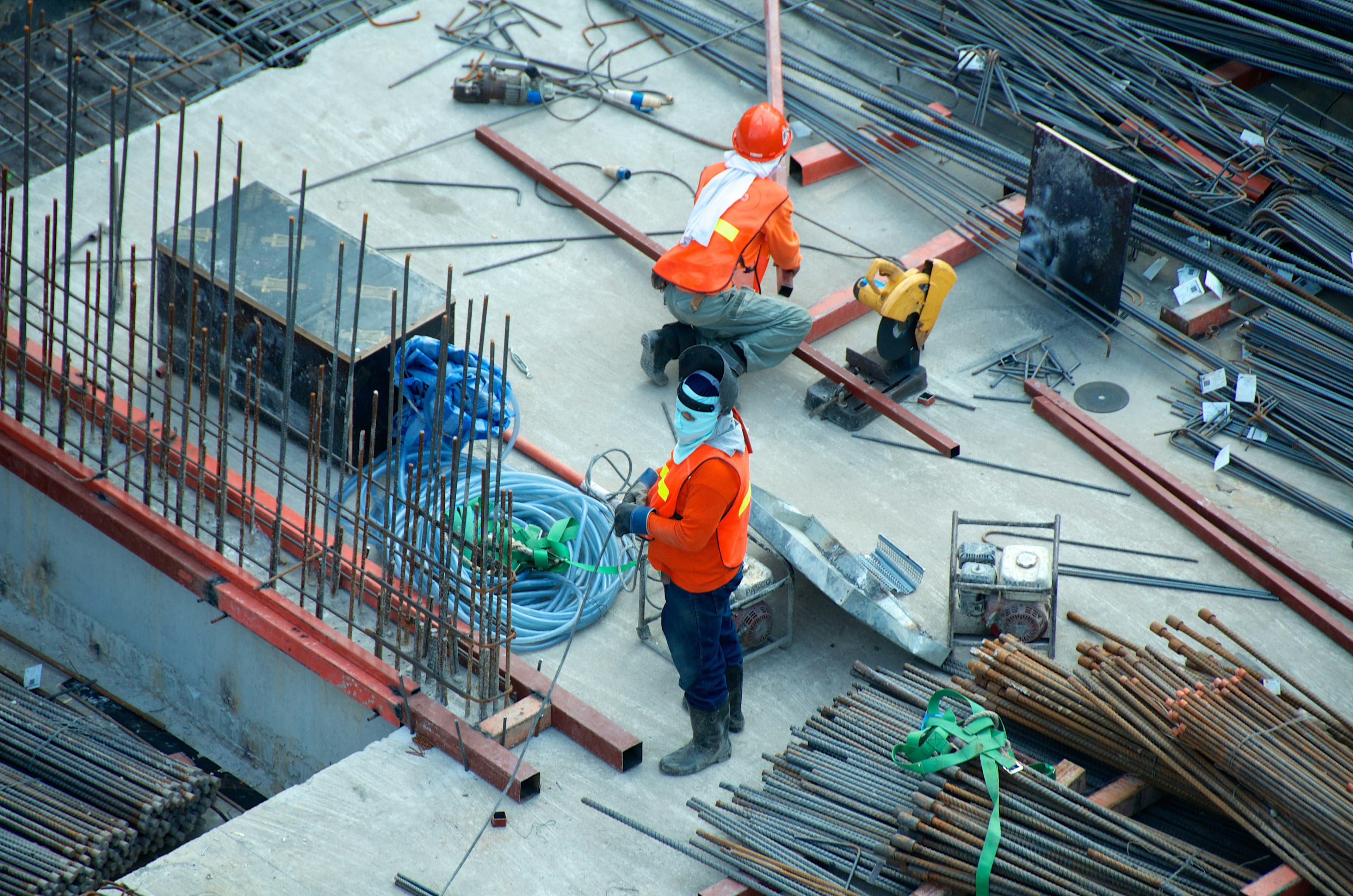
Why workflow fragmentation is a persistent problem in construction
Construction companies operate through distributed job sites, mobile crews, subcontractor networks, changing schedules, and project-specific cost structures. That operating model creates fragmentation by default. Field teams often rely on site logs, spreadsheets, email chains, text messages, paper delivery tickets, and disconnected point solutions for scheduling, safety, procurement, and reporting. Finance teams then attempt to reconcile those records after the fact, usually when cost overruns or billing delays have already appeared.
A construction ERP system addresses this problem by creating a shared operational backbone across estimating, project controls, procurement, inventory, equipment, payroll, subcontractor administration, and accounting. The value is not simply centralization. The real benefit is workflow continuity: a field event such as a material receipt, change order, equipment breakdown, or labor variance can move through operational, financial, and compliance processes without manual re-entry.
For general contractors, specialty contractors, civil firms, and multi-entity construction groups, fragmentation usually shows up in a few repeatable ways: delayed job cost visibility, inconsistent field reporting, duplicate vendor records, weak control over committed costs, poor coordination between project managers and accounting, and limited visibility into subcontractor performance. ERP does not remove construction complexity, but it can standardize how that complexity is managed.
Where field operations break down without an integrated ERP model
Field operations are where schedule pressure, labor variability, procurement timing, and site conditions converge. When systems are disconnected, supervisors and project managers spend time chasing information instead of managing production. The result is not only administrative inefficiency but also slower decisions on labor allocation, material replenishment, equipment usage, and billing readiness.
- Daily reports are submitted late or in inconsistent formats, making production tracking unreliable.
- Time capture is disconnected from cost codes, creating payroll corrections and inaccurate job costing.
- Material requests from the field are handled through calls or messages, with limited approval control.
- Purchase orders, receipts, and invoices do not align cleanly, delaying vendor payments and cost recognition.
- Change orders are tracked outside the core system, causing revenue leakage and disputed billing.
- Equipment usage and maintenance records are separated from project cost tracking.
- Subcontractor compliance documents are stored in multiple systems, increasing risk during audits and site reviews.
These issues are operationally connected. A late field report affects cost forecasting. Poor time capture affects payroll, union reporting, and job profitability. Weak procurement controls affect schedule reliability and cash flow. Construction ERP systems are most effective when they are designed around these cross-functional dependencies rather than treated as accounting software with project extensions.
Core construction ERP workflows that reduce fragmentation
The strongest construction ERP deployments focus on workflow design first. That means mapping how information should move from estimate to project setup, from field execution to cost capture, and from procurement to invoice reconciliation. Standardized workflows reduce the number of handoffs that depend on individual habits or local site practices.
Estimate-to-project setup
Once a bid is won, project setup should not require rebuilding budgets, cost codes, vendor structures, and contract values in separate systems. ERP can carry approved estimate data into project budgets, committed cost baselines, schedule-linked cost structures, and billing frameworks. This reduces setup delays and preserves the assumptions used during estimating.
Field time, production, and job cost capture
Mobile time entry tied to cost codes, crews, equipment, and production quantities is one of the most practical ways to reduce fragmentation. When labor hours are captured at the source and validated against project structures, payroll processing improves and project managers gain earlier visibility into cost variances. The tradeoff is that field adoption requires simple mobile workflows and disciplined supervisor review.
Procurement, materials, and committed cost control
Construction procurement is often decentralized because site teams need speed. ERP should support that reality without losing control. Requisition workflows, approved vendor lists, purchase orders, delivery receipts, and three-way invoice matching help companies manage committed costs while still allowing urgent site purchases. For self-performing contractors, linking warehouse or yard inventory to project demand also improves material availability and reduces duplicate buying.
Change management and billing
Change orders are a major source of fragmentation because field teams identify scope changes before commercial teams document them. ERP workflows can connect field issue logs, RFIs, change requests, pricing approvals, revised budgets, and customer billing. This does not eliminate disputes, but it creates a traceable process that supports margin protection and faster pay applications.
| Workflow Area | Common Fragmentation Point | ERP Control Mechanism | Operational Outcome |
|---|
| Project setup | Budget and cost code re-entry | Estimate-to-project data transfer | Faster mobilization and cleaner baseline budgets |
| Labor tracking | Paper timesheets and delayed approvals | Mobile time capture with cost code validation | Improved payroll accuracy and earlier cost visibility |
| Procurement | Untracked field purchases | Requisition and PO approval workflows | Better committed cost control and vendor accountability |
| Materials | No link between deliveries and project usage | Receipt logging tied to jobs and inventory | Reduced shortages and clearer material consumption |
| Change orders | Scope changes tracked in email or spreadsheets | Integrated change request and budget revision workflow | Lower revenue leakage and better billing support |
| Subcontractors | Compliance and performance records scattered | Centralized subcontractor records and document controls | Lower risk and stronger project oversight |
| Equipment | Usage and maintenance tracked separately | Equipment allocation and service records in ERP | Better utilization and fewer unplanned disruptions |
Inventory, supply chain, and equipment considerations in construction ERP
Construction inventory is different from traditional manufacturing inventory. Many materials are project-specific, demand is schedule-driven, and receiving often happens at temporary or constrained job sites. ERP systems for construction need to support yard inventory, direct-to-site deliveries, returns, transfers, and consumption tracking without forcing warehouse-heavy processes where they do not fit.
For contractors managing high-value materials, prefabricated assemblies, or service parts, inventory visibility can materially affect schedule performance. ERP can help by linking procurement plans to project schedules, tracking open purchase commitments, and recording receipts against jobs or stock locations. This is especially relevant for mechanical, electrical, plumbing, utility, and civil contractors where material timing directly affects crew productivity.
Equipment is another area where fragmentation creates hidden cost. If dispatch, maintenance, fuel usage, inspections, and job charging are handled in separate tools, project costs are understated and fleet utilization is difficult to optimize. Construction ERP platforms with equipment modules or integrations can connect asset availability, preventive maintenance, operator assignments, and project cost allocation.
- Track direct-ship materials separately from stocked inventory.
- Use project-specific reorder thresholds for critical materials with long lead times.
- Record delivery receipts at the field level to support invoice matching and dispute resolution.
- Tie equipment hours and maintenance events to project and asset records.
- Monitor supplier performance by lead time reliability, not only purchase price.
Reporting and analytics that improve operational visibility
Construction leaders do not need more reports in isolation. They need consistent operational visibility across jobs, regions, entities, and project types. ERP reporting should support daily execution, weekly project controls, and executive portfolio review. That requires common data definitions for cost codes, labor classes, vendor categories, equipment types, and change order status.
At the project level, the most useful analytics usually include budget versus actual cost, committed cost exposure, earned revenue position, labor productivity trends, open RFIs, pending change orders, subcontractor billing status, and equipment utilization. At the enterprise level, executives need backlog quality, cash flow exposure, margin erosion indicators, working capital trends, and comparative performance across business units.
A practical reporting model balances timeliness with data quality. Real-time dashboards are useful only when field inputs are standardized and approval workflows are clear. Many firms benefit from a layered approach: near-real-time operational dashboards for site and project teams, combined with controlled financial reporting cycles for accounting and executive review.
Key construction ERP metrics to standardize
- Labor hours by cost code, crew, and project phase
- Committed cost versus budget by project and vendor
- Material receipt status against planned need dates
- Change order aging and approval cycle time
- Subcontractor compliance status and billing progress
- Equipment utilization, downtime, and maintenance backlog
- Work-in-progress accuracy and billing readiness
- Cash collection timing against project milestones
Compliance, governance, and document control requirements
Construction ERP decisions are often driven by cost control, but governance requirements are equally important. Contractors must manage lien waivers, certified payroll, union rules, prevailing wage requirements, safety documentation, insurance certificates, subcontractor qualifications, retention, and audit trails for approvals. Fragmented systems make these controls difficult to enforce consistently.
ERP can support governance by centralizing approval hierarchies, document retention rules, role-based access, and transaction traceability. For multi-entity firms, this is especially important when projects span jurisdictions or involve different labor and tax rules. The objective is not to force every business unit into identical processes, but to define a controlled operating model with approved exceptions.
Document control also matters in field operations. Delivery tickets, inspection records, safety forms, daily logs, and subcontractor documents should be linked to project records and accessible to both field and back-office teams. This reduces time spent searching for evidence during disputes, audits, and owner reviews.
Cloud ERP and mobile access for distributed construction teams
Cloud ERP is increasingly relevant in construction because work happens across offices, job sites, yards, and remote locations. Mobile access allows supervisors, foremen, project engineers, and field service teams to enter time, approve receipts, review purchase requests, submit daily reports, and access project documents without waiting to return to the office.
However, cloud deployment does not automatically solve field adoption. Construction environments involve variable connectivity, shared devices, subcontractor participation, and users with limited tolerance for complex interfaces. ERP selection should therefore consider offline capability, mobile workflow simplicity, role-based screens, and integration with existing field tools where replacement is not practical.
For enterprise contractors, cloud ERP also supports standardized rollouts across regions and acquisitions. Shared master data, centralized security, and common reporting models are easier to maintain in a cloud architecture. The tradeoff is that process discipline becomes more visible. Local workarounds that were hidden in spreadsheets are harder to sustain once workflows are standardized.
AI and automation opportunities in construction ERP
AI in construction ERP is most useful when applied to repetitive operational tasks and exception detection rather than broad autonomous decision-making. Contractors can gain value from automation that reduces administrative lag, improves data quality, and highlights issues earlier in the project lifecycle.
- Automated invoice matching against purchase orders and receipts
- Exception alerts for labor cost spikes, delayed approvals, or missing field reports
- Predictive identification of schedule or cost variance patterns based on historical jobs
- Document classification for subcontractor compliance records and project correspondence
- Suggested coding for expenses, receipts, and equipment charges based on prior transactions
These capabilities depend on clean process design and reliable master data. If cost codes, vendor records, and project structures are inconsistent, automation will amplify confusion rather than reduce it. Construction firms should treat AI as an extension of workflow standardization, not a substitute for it.
Implementation challenges and realistic tradeoffs
Construction ERP implementations often struggle when companies underestimate process variation across project types, regions, and acquired entities. A civil contractor, a specialty trade contractor, and a commercial general contractor may all need different field workflows even if they share a financial platform. The implementation approach should distinguish between enterprise standards that must be common and operational practices that can remain role- or business-unit-specific.
Another common challenge is sequencing. Many firms try to deploy accounting, project management, procurement, field reporting, equipment, payroll, and analytics simultaneously. That increases risk. A phased model is usually more practical: establish core financial and project structures first, then extend into field mobility, procurement controls, equipment, and advanced analytics.
Data migration is also more difficult in construction than in some other industries because historical project data is often inconsistent and partially complete. Companies should decide early which data needs to be migrated for operational continuity, which can be archived, and which should be cleansed before go-live. Attempting to preserve every legacy exception usually delays the program without improving outcomes.
- Define a standard cost code and project structure model before system configuration.
- Prioritize workflows that directly affect job costing, billing, and procurement control.
- Limit customizations unless they support a clear operational requirement.
- Design mobile workflows around field reality, including low-connectivity conditions.
- Assign process owners from operations, finance, procurement, and field leadership.
- Measure adoption through transaction quality and cycle time, not only training completion.
Vertical SaaS opportunities around the construction ERP core
Not every construction process needs to live natively inside the ERP. In many cases, the best operating model combines ERP as the system of record with vertical SaaS applications for specialized workflows such as advanced scheduling, BIM coordination, field inspections, safety management, service dispatch, or preconstruction collaboration.
The key is integration discipline. Specialized tools should feed approved data back into the ERP for cost control, compliance, billing, and reporting. Without that integration, firms simply recreate fragmentation in a more modern interface. Enterprise architecture decisions should therefore focus on which workflows require deep transactional control in ERP and which can remain in adjacent platforms.
For example, a contractor may use a vertical field operations app for daily logs and issue tracking while relying on ERP for job cost, procurement, subcontracts, and financial reporting. That can work well if project IDs, cost codes, vendor records, and approval states are synchronized consistently.
Executive guidance for selecting and scaling construction ERP
Executives evaluating construction ERP systems should start with operational priorities rather than feature lists. The central question is where fragmentation is creating measurable business risk: margin leakage, billing delays, weak committed cost control, poor field visibility, compliance exposure, or inability to scale across entities and regions.
Selection criteria should include support for project-centric accounting, mobile field workflows, subcontractor administration, procurement controls, equipment tracking, reporting flexibility, cloud deployment, and integration with construction-specific applications. Just as important is the vendor's ability to support governance, data model consistency, and phased implementation across a distributed operating environment.
For growing contractors, scalability means more than transaction volume. The ERP should support new business units, acquired companies, additional legal entities, changing labor models, and more complex reporting requirements without forcing a full process redesign every time the organization expands.
- Identify the top five fragmented workflows affecting project margin and cash flow.
- Standardize master data for projects, cost codes, vendors, equipment, and labor classes.
- Choose a phased rollout plan with measurable operational milestones.
- Require field usability testing before finalizing mobile workflows.
- Define integration rules for any vertical SaaS applications that remain in the stack.
- Establish executive governance for process exceptions, data ownership, and reporting standards.
A well-designed construction ERP program does not remove the variability of field operations. It creates a controlled framework for managing that variability with better visibility, cleaner handoffs, and more reliable financial and operational data. For construction firms trying to reduce workflow fragmentation, that is the practical path to stronger project execution and more scalable enterprise operations.