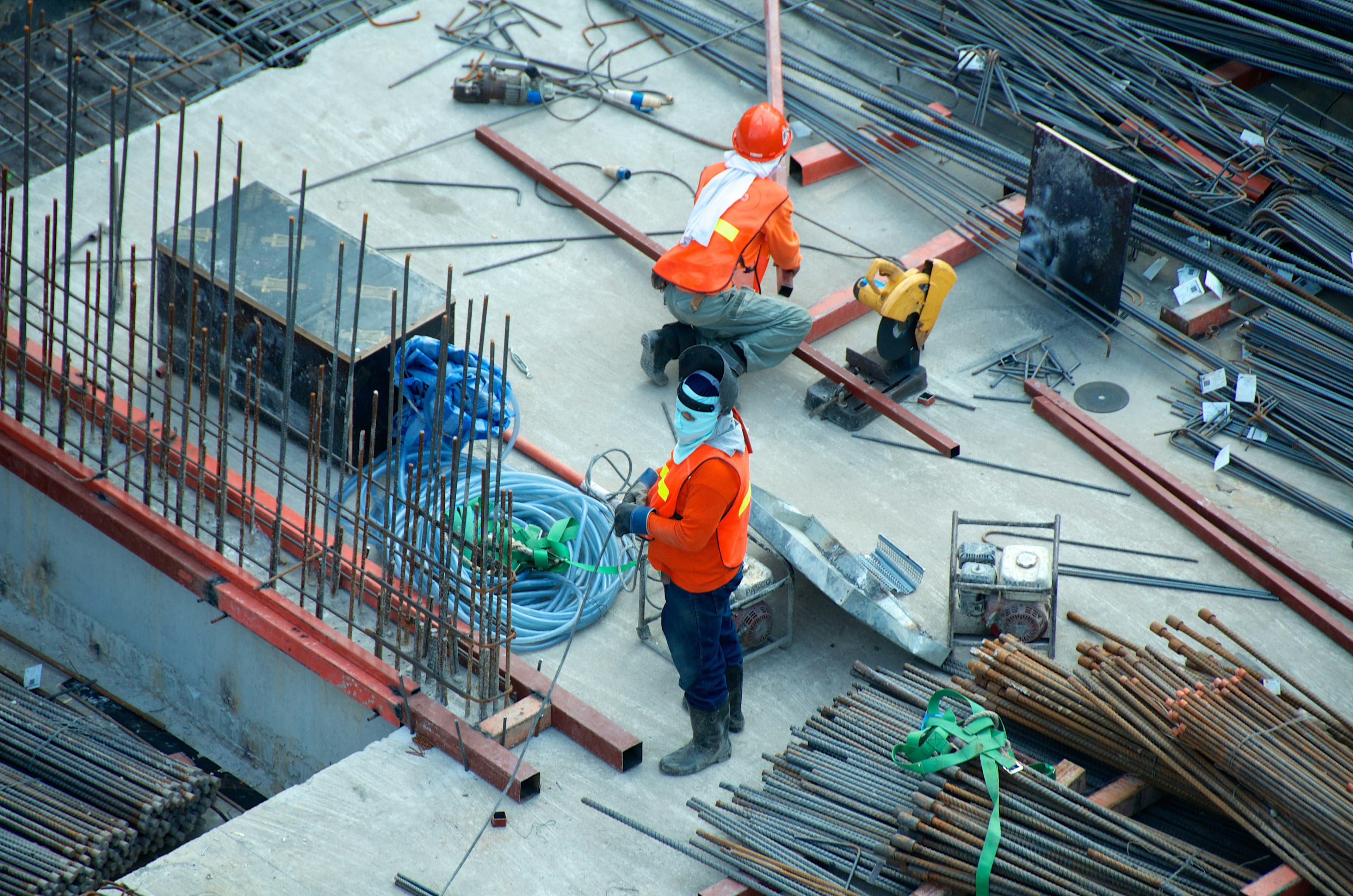
Construction AI Agents for Coordinating Field Operations and Back-Office Processes
Explore how construction AI agents connect field operations, ERP workflows, project controls, procurement, finance, and compliance into a coordinated operating model. Learn where AI-powered automation delivers value, what infrastructure is required, and how enterprises should govern implementation at scale.
May 11, 2026
Why construction enterprises are deploying AI agents across operations
Construction organizations operate across fragmented systems, distributed job sites, subcontractor networks, and time-sensitive financial controls. Field teams manage schedules, safety observations, equipment usage, inspections, and daily reports, while back-office teams manage procurement, payroll, billing, change orders, compliance, and ERP data integrity. The coordination gap between these environments creates delays, rework, cost leakage, and inconsistent decision-making.
Construction AI agents are emerging as a practical enterprise layer for coordinating these workflows. Rather than replacing core systems, they sit across project management platforms, AI analytics platforms, document repositories, mobile field apps, and AI in ERP systems to interpret events, trigger actions, route approvals, and surface operational intelligence. This makes them useful for enterprises that need faster execution without introducing another disconnected application.
In this model, AI-powered automation is not limited to chat interfaces. It includes agents that monitor RFIs, compare field progress against schedules, detect invoice mismatches, summarize site logs, recommend procurement actions, and escalate exceptions to project controls or finance. The value comes from workflow coordination, not from isolated model outputs.
Field-to-office synchronization for daily reports, labor hours, materials, and equipment usage
AI workflow orchestration across ERP, project controls, procurement, payroll, and compliance systems
Predictive analytics for schedule risk, cost variance, and resource bottlenecks
Build Scalable Enterprise Platforms
Deploy ERP, AI automation, analytics, cloud infrastructure, and enterprise transformation systems with SysGenPro.
Construction AI Agents for Field Operations and Back-Office ERP Coordination | SysGenPro ERP
AI-driven decision systems that prioritize exceptions instead of flooding teams with alerts
Operational automation for repetitive approvals, document classification, and status updates
What construction AI agents actually do in enterprise environments
In enterprise construction settings, AI agents function as task-specific coordinators. One agent may monitor field reports and compare them with the master schedule. Another may review purchase requests against budget codes and vendor terms in the ERP. A finance-focused agent may reconcile subcontractor invoices with progress milestones, approved change orders, and retention rules. These agents are most effective when they are connected to governed data sources and clear workflow boundaries.
This is especially relevant for firms running multiple projects across regions. A superintendent may need immediate visibility into labor productivity and safety issues, while a controller needs confidence that committed costs, accruals, and billing events are reflected correctly in the back office. AI agents can bridge these needs by translating operational events into structured actions and enterprise records.
The practical design principle is simple: agents should augment operational workflows, not create parallel decision structures. They should collect context, recommend actions, execute approved tasks, and maintain traceability for audit and compliance.
Generates portfolio summaries from project, cost, and risk data
BI platform, ERP, data warehouse
More consistent operational intelligence for leadership
AI in ERP systems as the coordination backbone
For construction enterprises, ERP remains the financial and operational system of record. That makes AI in ERP systems central to any serious automation strategy. AI agents can only coordinate effectively when they can read and write governed data tied to job cost structures, vendor records, payroll rules, contract terms, inventory positions, and billing workflows.
A common mistake is to deploy AI only at the edge of the organization through standalone copilots or field apps. That may improve local productivity, but it does not resolve the underlying disconnect between field execution and enterprise controls. When AI agents are integrated with ERP workflows, they can convert field events into approved transactions, update commitments, trigger procurement actions, and support AI business intelligence with cleaner operational data.
Examples include converting approved field material requests into ERP purchase requisitions, validating labor coding before payroll processing, or identifying when a change in site conditions should trigger a change order workflow. These are not experimental use cases. They are operational coordination patterns that reduce latency between what happens on site and what is reflected in enterprise systems.
ERP-connected AI agent use cases in construction
Automated review of subcontractor billing against percent-complete data and approved scope changes
Detection of job cost anomalies based on historical project patterns and current commitments
Routing of equipment maintenance events into work orders, inventory reservations, and downtime reporting
Validation of timesheets using geolocation, crew assignments, and project calendars
Generation of executive cash flow forecasts using project schedules, billing milestones, and AP timing
AI workflow orchestration between field operations and back-office teams
The strongest enterprise value comes from AI workflow orchestration. Construction firms rarely suffer from a lack of data. They suffer from delayed handoffs, inconsistent approvals, and fragmented accountability. AI agents can orchestrate these handoffs by monitoring workflow states across systems and ensuring that the next action is triggered with the right context.
Consider a concrete delivery delay. In a traditional process, the field team updates a log, the scheduler adjusts manually, procurement checks replacement options, and finance may not understand the cost impact until later. In an orchestrated model, an AI agent detects the delay from field input or supplier updates, assesses schedule dependencies, notifies the project manager, proposes procurement alternatives, updates risk indicators in the BI layer, and prepares a cost-impact summary for review.
This is where AI agents and operational workflows become materially different from simple automation scripts. They can reason across multiple process states, retrieve supporting documents through semantic retrieval, and adapt routing based on project type, contract structure, or approval thresholds.
Trigger workflows from field events, supplier updates, sensor data, or document submissions
Retrieve contracts, drawings, change logs, and ERP records to provide decision context
Apply business rules for approval thresholds, compliance requirements, and role-based routing
Escalate unresolved exceptions to project executives, controllers, or operations leaders
Write approved outcomes back into ERP, project controls, and reporting systems
Predictive analytics and AI-driven decision systems for project execution
Construction leaders increasingly need predictive analytics that move beyond retrospective dashboards. AI-driven decision systems can combine schedule data, labor productivity, weather patterns, procurement lead times, safety incidents, and cost performance to identify where intervention is needed before a project drifts materially off plan.
The practical role of AI here is prioritization. Most project teams already know that risk exists. What they need is a ranked view of which issues are likely to affect margin, schedule, or compliance, and what actions are available. AI agents can support this by continuously scoring risk signals and generating recommended actions tied to operational workflows.
For example, if labor productivity drops on a critical path activity while a key material shipment is delayed, an agent can flag the combined risk, estimate likely schedule impact, and suggest mitigation options such as crew reallocation, resequencing, or expedited procurement. The recommendation should remain reviewable by human managers, especially when contractual or safety implications are involved.
Where predictive models are most useful
Forecasting schedule slippage based on current progress and dependency patterns
Predicting cost overruns from labor variance, material inflation, and change order trends
Identifying subcontractor performance risk using quality, timeliness, and claims history
Anticipating equipment downtime from maintenance records and utilization patterns
Estimating cash flow pressure from billing delays, retention timing, and AP obligations
Enterprise AI governance in construction environments
Construction AI deployments require stronger governance than many organizations initially expect. The data spans contracts, payroll, safety records, project financials, engineering documents, and third-party communications. AI agents operating across these domains need role-based access, audit trails, policy controls, and clear boundaries on autonomous actions.
Enterprise AI governance should define which decisions can be automated, which require approval, how model outputs are validated, and how exceptions are logged. In construction, this matters because errors can affect billing accuracy, regulatory compliance, subcontractor disputes, and project claims. Governance is not a legal afterthought; it is an operating requirement.
A mature governance model also addresses prompt controls, retrieval source quality, model versioning, and retention policies for generated outputs. If an AI agent recommends a procurement action or summarizes a site incident, the enterprise should be able to trace the source data, the workflow path, and the final approver.
Define human-in-the-loop thresholds for financial, contractual, and safety-sensitive actions
Restrict agent access by project, region, role, and data classification
Maintain logs for retrieval sources, recommendations, approvals, and system updates
Test models against construction-specific edge cases such as change order disputes or incomplete field data
Align governance with internal audit, legal, compliance, and operations leadership
AI infrastructure considerations for enterprise construction firms
AI infrastructure decisions shape whether construction AI agents remain pilot tools or become scalable enterprise capabilities. Most firms need an architecture that connects ERP, project management, scheduling, document management, data warehouses, and mobile field systems through APIs, event streams, and governed integration layers.
Semantic retrieval is particularly important because construction workflows depend on unstructured content such as contracts, RFIs, submittals, drawings, inspection notes, and meeting minutes. Agents need retrieval pipelines that can identify the right document fragments, preserve version context, and avoid mixing outdated project information with current records.
Enterprises should also plan for latency, offline field conditions, model hosting choices, and observability. A field-facing agent may need lightweight mobile interactions and delayed synchronization, while a finance agent may require tighter controls and direct ERP integration. One architecture rarely fits every workflow.
Core infrastructure components
Integration layer for ERP, project systems, supplier platforms, and field applications
Data platform for structured and unstructured construction data
Semantic retrieval services for contracts, drawings, logs, and compliance documents
Workflow engine for approvals, escalations, and operational automation
Monitoring stack for model performance, data quality, security events, and user activity
AI security and compliance tradeoffs
AI security and compliance are central in construction because project data often includes sensitive financial records, employee information, site access details, and confidential owner or subcontractor documents. AI agents should not be granted broad access simply for convenience. Access should be scoped to the minimum data required for each workflow.
There are also tradeoffs between speed and control. Broad retrieval access may improve answer quality, but it increases the risk of exposing irrelevant or restricted information. Highly restrictive controls may reduce utility if agents cannot access the context needed to complete a task. Enterprises need policy-based balancing rather than default openness or default lockdown.
Compliance requirements vary by geography, labor model, public-sector contract obligations, and document retention rules. Construction firms should map AI workflows to these obligations early, especially when using third-party models or cloud services. Security architecture should include encryption, identity federation, logging, and review processes for high-impact actions.
Implementation challenges that slow construction AI programs
The main AI implementation challenges in construction are not usually model quality alone. They are process inconsistency, poor master data, fragmented system ownership, and unclear accountability between field operations and back-office teams. If project codes, vendor records, cost structures, or document naming conventions are inconsistent, AI agents will amplify confusion rather than reduce it.
Another challenge is over-automation. Some workflows appear repetitive but contain contractual nuance or project-specific exceptions that require human judgment. Enterprises should start with bounded workflows where the decision criteria are clear, the data is available, and the business impact is measurable.
Change management also matters. Superintendents, project managers, controllers, and procurement teams need to trust that the agent is using current data and following approved rules. Adoption improves when agents explain why an action was recommended, what sources were used, and what the user can approve or override.
Inconsistent job cost structures across business units
Disconnected field apps and back-office ERP workflows
Unclear ownership of AI exceptions and workflow redesign
Difficulty measuring value when pilots are not tied to operational KPIs
A practical enterprise transformation strategy for construction AI agents
A workable enterprise transformation strategy starts with process selection, not model selection. Construction firms should identify cross-functional workflows where delays, manual reconciliation, or exception handling create measurable cost or schedule impact. Good starting points include subcontractor billing review, field-to-ERP material requests, change order intake, safety documentation routing, and schedule risk escalation.
The next step is to define the operating model. This includes workflow ownership, approval thresholds, integration requirements, data access policies, and success metrics. AI agents should be introduced as part of a broader operational automation program tied to ERP modernization, project controls maturity, and AI business intelligence objectives.
Scalability depends on standardization. Enterprises that create reusable agent patterns, shared retrieval services, common governance controls, and consistent integration methods are more likely to achieve enterprise AI scalability than firms that launch isolated pilots on each project. The goal is a coordinated AI operating layer that can support multiple workflows without duplicating infrastructure.
Recommended rollout sequence
Prioritize 2 to 3 workflows with clear financial or operational impact
Connect those workflows to ERP and project systems of record
Implement retrieval, approval, and audit controls before expanding autonomy
Measure cycle time, exception rates, cost leakage, and user adoption
Scale using reusable agent templates, governance policies, and integration services
What success looks like at enterprise scale
At scale, construction AI agents should improve coordination quality more than interface novelty. The strongest outcomes include faster field-to-office synchronization, fewer invoice and procurement exceptions, earlier schedule risk detection, better compliance execution, and more reliable portfolio reporting. These gains come from connecting operational workflows to enterprise systems with governance and traceability.
For CIOs and transformation leaders, the strategic question is not whether AI can summarize project data. It is whether AI can help the enterprise run a more synchronized operating model across jobs, regions, and support functions. That requires disciplined architecture, realistic workflow design, and a clear view of where human judgment remains essential.
Construction firms that approach AI agents as part of enterprise process coordination, rather than isolated productivity tooling, are better positioned to improve operational intelligence and execution resilience. In a sector where margin depends on timing, accuracy, and controlled handoffs, that is where AI-powered automation becomes operationally meaningful.
Frequently Asked Questions
Common enterprise questions about ERP, AI, cloud, SaaS, automation, implementation, and digital transformation.
What are construction AI agents in an enterprise context?
↓
Construction AI agents are software agents that monitor events, retrieve project context, recommend actions, and execute approved workflow steps across field systems, ERP platforms, project controls, procurement, finance, and compliance tools. Their role is to coordinate work, not just generate text.
How do AI agents improve coordination between field operations and the back office?
↓
They reduce delays between site activity and enterprise processing by translating field events into structured workflows. Examples include routing material requests into ERP purchasing, validating labor coding before payroll, escalating schedule risks, and reconciling invoices against project progress and contract terms.
Why is ERP integration important for construction AI automation?
↓
ERP integration gives AI agents access to governed financial and operational records such as job costs, vendor data, contracts, payroll rules, and billing workflows. Without ERP connectivity, AI may improve local productivity but will not reliably coordinate enterprise execution or maintain system-of-record integrity.
What are the main risks when deploying AI agents in construction?
↓
The main risks include poor data quality, inconsistent process design, over-automation of contract-sensitive decisions, weak access controls, and limited auditability. These issues can affect billing accuracy, compliance, subcontractor relationships, and trust in the system.
Which construction workflows are best suited for early AI agent adoption?
↓
Strong early candidates include subcontractor billing review, field-to-ERP purchase requests, change order intake, safety documentation routing, schedule risk escalation, and daily report summarization. These workflows are repetitive enough for automation but important enough to produce measurable business value.
How should enterprises govern AI agents in construction operations?
↓
They should define approval thresholds, role-based access, retrieval controls, audit logging, model testing procedures, and exception ownership. Governance should involve operations, finance, IT, compliance, and legal teams so that AI actions align with contractual, financial, and regulatory requirements.