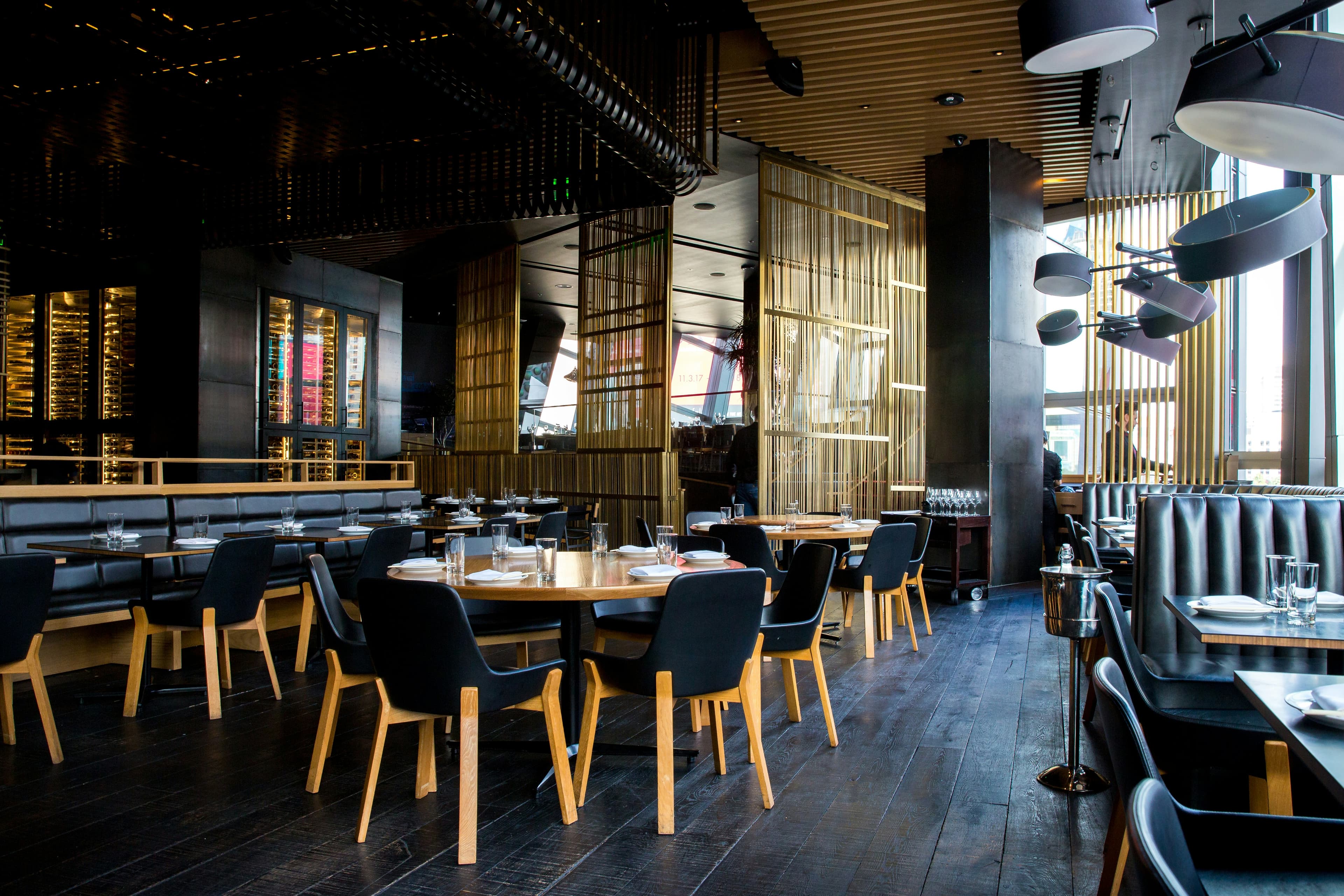
Hospitality SaaS ERP for Inventory Automation and Multi-Site Operations Control
A practical guide to hospitality SaaS ERP for inventory automation, recipe costing, procurement control, and multi-site operations visibility across hotels, restaurants, resorts, and food service groups.
May 11, 2026
Why hospitality organizations need SaaS ERP for inventory and site control
Hospitality operations run on thin margins, variable demand, labor constraints, and constant service expectations. Whether the business operates hotels, restaurants, resorts, catering units, or mixed hospitality portfolios, the operational challenge is similar: inventory moves quickly, purchasing is decentralized, waste is difficult to measure, and site managers often work from partial information. A hospitality SaaS ERP creates a common operational system for finance, procurement, stock control, recipe costing, vendor management, and site-level reporting.
In many hospitality groups, inventory decisions are still spread across spreadsheets, point-of-sale exports, supplier portals, and local stock counts. This leads to inconsistent purchasing, poor visibility into food and beverage margins, delayed month-end close, and uneven controls across locations. Multi-site operators feel this most acutely because each property or outlet develops local workarounds that make enterprise reporting unreliable.
A vertical SaaS ERP for hospitality addresses these issues by standardizing workflows while preserving site-level flexibility where it matters. It connects purchasing, receiving, transfers, production, consumption, waste, and financial posting into one operating model. The result is not simply software consolidation. It is tighter operational control over stock, spend, menu profitability, and service continuity.
Where hospitality inventory control usually breaks down
Purchasing is handled locally without approved supplier, contract, or price controls.
Build Scalable Enterprise Platforms
Deploy ERP, AI automation, analytics, cloud infrastructure, and enterprise transformation systems with SysGenPro.
Hotel, restaurant, banquet, minibar, and retail outlets operate on separate systems with limited integration.
Corporate teams lack real-time visibility into stock exposure, purchasing compliance, and margin leakage.
Core hospitality ERP workflows that benefit from automation
Hospitality ERP value comes from workflow discipline more than feature volume. The most effective deployments focus on repeatable operational processes that directly affect cost of goods sold, service availability, and site accountability. Inventory automation should support the full lifecycle from demand planning through consumption and financial reconciliation.
For hotels and restaurants, this means aligning front-of-house demand signals with back-of-house purchasing and stock movement. For resorts and multi-property groups, it also means standardizing controls across central kitchens, bars, event operations, room service, retail points, and maintenance stores. The ERP should capture both high-volume consumables and controlled items such as alcohol, premium ingredients, linens, amenities, and engineering supplies.
Lower maverick spend and better supplier compliance
Receiving
Mismatch between ordered, delivered, and invoiced quantities
Three-way matching, mobile receiving, exception alerts
Improved invoice accuracy and stock integrity
Inventory counts
Manual counts with delayed reconciliation
Cycle counts, mobile count sheets, variance workflows
Faster stock accuracy and reduced shrinkage
Recipe costing
Static menu costs despite changing ingredient prices
Dynamic bill of materials, yield factors, price updates
More accurate menu margin analysis
Inter-site transfers
Untracked movement between outlets or properties
Transfer requests, shipment confirmation, receiving validation
Better multi-site stock visibility
Waste management
Spoilage and overproduction not measured consistently
Waste codes, reason tracking, approval thresholds
Clearer root-cause analysis and waste reduction
Financial posting
Delayed cost recognition and manual journal entries
Automated inventory valuation and GL integration
Faster close and stronger audit trail
Executive reporting
Fragmented site-level reporting
Role-based dashboards and standardized KPIs
Enterprise visibility across locations
Procurement and supplier management in hospitality ERP
Procurement in hospitality is more volatile than in many other sectors because demand shifts with occupancy, seasonality, events, weather, and local promotions. A SaaS ERP should support par-level replenishment, forecast-informed purchasing, approved supplier lists, contract pricing, substitute item logic, and site-specific approval thresholds. This is especially important for groups balancing centralized sourcing with local purchasing needs.
Supplier management should also include lead times, minimum order quantities, delivery schedules, quality exceptions, and invoice discrepancy tracking. In practice, this helps operators compare not only unit price but service reliability and fill rate. For hospitality groups with multiple brands or formats, supplier governance becomes a major lever for margin control.
Recipe costing, production, and consumption tracking
Food and beverage profitability depends on accurate recipe structures, portion standards, and yield assumptions. Many operators know menu sales but not true item-level margin because ingredient prices change faster than recipe files are updated. Hospitality ERP systems can maintain recipe bills of materials, sub-recipes, batch production, unit conversions, and theoretical versus actual consumption analysis.
This matters beyond restaurants. Hotels need the same discipline for breakfast service, banquets, minibar replenishment, room service, bars, and event catering. When recipe costing is linked to procurement and stock movement, operators can see where margin erosion comes from: price inflation, over-portioning, waste, theft, or poor transfer control.
Multi-site operations control across hotels, restaurants, and hospitality groups
Multi-site hospitality operations require a balance between standardization and local autonomy. Corporate teams need common item masters, chart of accounts, supplier governance, and KPI definitions. Site managers need flexibility for local vendors, menu variations, event-driven demand, and regional compliance requirements. A hospitality SaaS ERP should support both through role-based controls and configurable workflows.
The operational objective is not to force every property into identical behavior. It is to ensure that inventory, purchasing, and financial data are captured in a consistent structure. This allows enterprise teams to compare sites on a like-for-like basis while still accounting for format differences such as luxury hotel dining, quick-service outlets, resort banquets, or franchise-operated units.
Standardized item and supplier master data across all sites
Site-level approval matrices based on spend, category, and urgency
Central visibility into stock on hand, stock in transit, and stock at risk
Common waste and variance codes for enterprise analysis
Inter-property transfer workflows with receiving confirmation
Shared reporting definitions for food cost, beverage cost, and inventory turns
Brand or region-specific controls for menu, tax, and compliance requirements
Operational visibility for corporate and site leadership
Visibility is one of the main reasons hospitality groups invest in ERP, but visibility only matters if the underlying data is timely and governed. Dashboards should not be limited to finance summaries. Operations leaders need daily insight into stockouts, overstock, purchase price variance, waste trends, transfer delays, invoice exceptions, and outlet-level margin performance.
For site managers, the ERP should surface actionable exceptions rather than broad reports. A chef or food and beverage manager needs to know which items are outside par, which deliveries were short, which recipes have margin deterioration, and which counts require recount approval. For executives, the focus shifts to cross-site benchmarking, supplier concentration risk, and working capital tied up in inventory.
Inventory automation opportunities in hospitality environments
Inventory automation in hospitality should be applied selectively. Not every process benefits equally from automation, and overengineering can create adoption problems at the site level. The strongest use cases are repetitive, high-volume, and exception-prone workflows where manual handling creates cost leakage or reporting delays.
Examples include automated reorder suggestions based on par levels and forecast demand, mobile receiving with discrepancy capture, barcode-assisted stock counts, invoice matching, and scheduled variance reporting. In larger groups, automation can also support central purchasing recommendations, transfer balancing between nearby sites, and replenishment for controlled categories such as alcohol or premium ingredients.
Automated replenishment recommendations using occupancy, reservations, event schedules, and historical consumption
Mobile receiving with quantity, quality, and temperature checks where required
Automated invoice matching against purchase orders and goods receipts
Cycle count scheduling by category risk, value, or spoilage profile
Exception alerts for negative stock, unusual waste, or off-contract purchases
Theoretical versus actual usage analysis for menu items and beverage programs
Automated transfer suggestions to reduce overstock and spoilage across nearby sites
AI and analytics relevance in hospitality ERP
AI in hospitality ERP is most useful when applied to forecasting, anomaly detection, and workflow prioritization rather than broad autonomous decision-making. Demand forecasting can improve purchasing for perishables by combining historical sales, occupancy, event calendars, weather patterns, and seasonality. Anomaly detection can flag unusual waste, invoice discrepancies, or consumption patterns that suggest process issues or shrinkage.
The practical limitation is data quality. If item masters, recipes, units of measure, and count practices are inconsistent, AI outputs will be unreliable. Hospitality groups should treat AI as a second-stage capability built on standardized workflows, governed data, and disciplined site execution.
Compliance, governance, and auditability considerations
Hospitality organizations operate under a mix of financial, food safety, labor, tax, and brand governance requirements. ERP does not replace specialized compliance systems, but it plays a central role in maintaining traceable operational records. Purchase approvals, receiving logs, stock adjustments, waste entries, recipe changes, and invoice matching all contribute to a stronger audit trail.
For food and beverage operations, governance often includes lot tracking for selected categories, shelf-life monitoring, temperature or quality checks at receiving, and documented waste handling. For hotel groups, governance may also extend to franchise reporting, owner reporting, internal controls over purchasing, and segregation of duties across site and corporate teams.
Role-based access controls for purchasing, stock adjustments, and approvals
Approval workflows for non-standard purchases, urgent buys, and write-offs
Audit logs for recipe changes, price overrides, and inventory corrections
Standardized coding for waste, spoilage, breakage, and complimentary usage
Support for tax, entity, and regional reporting structures across properties
Document retention for purchase orders, receipts, invoices, and supplier records
Cloud ERP and vertical SaaS considerations for hospitality
Cloud ERP is well suited to hospitality because operations are distributed, site turnover can be high, and leadership needs remote visibility across locations. SaaS delivery simplifies upgrades, accelerates rollout to new sites, and reduces dependence on local infrastructure. It also supports mobile workflows for receiving, counts, approvals, and site-level reporting.
That said, hospitality buyers should evaluate cloud ERP beyond deployment convenience. The more important questions are whether the platform supports hospitality-specific workflows, integrates with point-of-sale, property management, procurement, and accounting systems, and can handle multi-entity, multi-brand, and multi-site structures without excessive customization.
Vertical SaaS opportunities are strongest where hospitality processes differ materially from general ERP assumptions. Recipe management, banquet costing, minibar replenishment, outlet-level stock control, event consumption tracking, and franchise reporting are examples where hospitality-specific functionality can reduce implementation complexity and improve adoption.
Integration priorities in a hospitality ERP architecture
Point-of-sale systems for sales, item mix, and theoretical consumption
Property management systems for occupancy and room-related demand signals
Accounts payable and finance systems for invoice processing and close
Supplier networks or e-procurement tools for ordering and confirmations
Business intelligence platforms for enterprise reporting and benchmarking
Workforce or scheduling systems where labor and production planning intersect
Implementation challenges and realistic tradeoffs
Hospitality ERP implementations often fail when organizations treat them as software projects instead of operating model changes. The main challenge is not configuration. It is standardizing data, roles, and site routines across environments with different service models and management maturity. A technically capable system will still underperform if counts are skipped, recipes are outdated, or receiving is not enforced.
There are also practical tradeoffs. Tight approval controls can improve spend governance but slow urgent purchasing during service peaks. Highly detailed recipe structures can improve costing accuracy but increase maintenance effort. Centralized item masters improve reporting consistency but may frustrate sites with local sourcing needs. The right design depends on category criticality, site complexity, and management capacity.
A phased rollout is usually more effective than a broad enterprise launch. Many groups start with procurement, inventory, and reporting at a pilot set of sites, then expand into recipe costing, transfer control, and advanced analytics. This approach allows the organization to refine master data, training, and exception handling before scaling.
Common implementation risks
Inconsistent units of measure and item naming across sites
Poor recipe governance and missing yield assumptions
Weak ownership of stock count discipline
Over-customization to preserve legacy local practices
Insufficient integration testing with POS, PMS, and finance systems
Lack of executive sponsorship for cross-site standardization
Training focused on transactions instead of operational accountability
Executive guidance for selecting and scaling hospitality SaaS ERP
Executives evaluating hospitality SaaS ERP should begin with operational priorities, not vendor feature lists. The first question is where margin leakage and control gaps are occurring today: purchasing compliance, stock accuracy, recipe costing, waste, transfer visibility, or reporting delays. The second is which workflows need enterprise standardization and which should remain locally configurable.
A strong selection process maps the end-to-end workflow from demand signal to financial posting, identifies system handoffs, and defines the minimum data standards required for reliable reporting. It also tests whether the platform can support future growth such as new properties, franchise models, central kitchens, regional distribution, or additional outlet formats.
Define a target operating model for procurement, inventory, and site reporting before software selection
Prioritize master data governance for items, suppliers, recipes, units, and locations
Select KPI definitions early, including food cost, beverage cost, waste rate, stock variance, and inventory turns
Pilot in sites with different operating profiles to test scalability
Measure adoption through count completion, receiving compliance, and approval adherence
Plan integration architecture early to avoid reporting fragmentation
Treat AI features as dependent on data quality and workflow maturity
For hospitality groups managing multiple sites, the long-term value of ERP comes from operational consistency, not just transaction processing. When procurement, inventory, costing, and reporting are standardized in a practical way, leadership gains better control over margins, working capital, and service continuity. That is the real case for hospitality SaaS ERP: disciplined multi-site operations supported by usable automation and reliable visibility.
Common enterprise questions about ERP, AI, cloud, SaaS, automation, implementation, and digital transformation.
What is hospitality SaaS ERP?
↓
Hospitality SaaS ERP is a cloud-based enterprise system designed to manage hospitality workflows such as procurement, inventory, recipe costing, supplier control, financial posting, and multi-site reporting for hotels, restaurants, resorts, and food service groups.
How does hospitality ERP improve inventory automation?
↓
It automates key stock workflows including reorder recommendations, receiving, invoice matching, cycle counts, transfer tracking, variance analysis, and waste recording. This reduces manual reconciliation and improves stock accuracy across sites.
Why is multi-site control important in hospitality operations?
↓
Multi-site control allows corporate teams to standardize purchasing, item masters, reporting definitions, and governance while still supporting local operating needs. This improves visibility, benchmarking, and margin control across properties or outlets.
Can hospitality SaaS ERP support recipe costing and menu margin analysis?
↓
Yes. Hospitality ERP can manage recipes, sub-recipes, yield factors, unit conversions, and ingredient price updates. This helps operators compare theoretical and actual consumption and understand true menu profitability.
What integrations matter most for hospitality ERP?
↓
The most important integrations usually include point-of-sale systems, property management systems, finance and accounts payable platforms, supplier ordering tools, and business intelligence systems for enterprise reporting.
What are the main implementation challenges for hospitality ERP?
↓
The main challenges are inconsistent master data, weak count discipline, outdated recipes, fragmented site practices, and insufficient integration testing. Success depends on workflow standardization, governance, and site-level adoption.
How should hospitality companies evaluate AI features in ERP?
↓
They should focus on practical use cases such as demand forecasting, anomaly detection, and exception prioritization. AI is most effective when the organization already has standardized data, reliable inventory processes, and consistent reporting structures.